the town

The highest point of the town held a water tower and once I rode down that hill on my scooter using my new shoe as a brake and when I reached the bottom I found the scooter’s tire had burned a big gash into the heel of my shoe.

The lowest point of the town held a lake and once I stubbed my toe in its silty bottom resulting in a trip to the doctor who poked holes in my toenail to relieve the pressure.

The town took away and it gave and it took away and it gave, sometimes it left parts of itself in me, parts that had to be removed, other times the parts remained encysted and grew into hard black stones that never went away.

The town visits me now, frequently, in my dreams. It is the setting for all types of absurd scenarios, completely unrelated to actual events, only tapping memory for details of setting, and even then playing sly with the facts, bending and shaping, but always leaving things just recognizable enough.

I find this unsettling as the town means nothing to me in my present life and I have not been there in many years. There is nothing there for me now. And yet it is the skeleton of my early life. The streets are the bones. There is a house somewhere that serves as the skull, with windows like eyeholes, looking out onto a world I was seeing for the first time.

I feel a pull toward the town and I don’t know why. I think it is the aching for a home, a place I know so well it is a part of me, inseparable from who I am and what I do. A known setting for my life, however I choose to live it, with scenery grown like vines through my blood and bones. The place where it all starts and ends. Home.

light | dark

Light Dark Light Dark Light Dark Light Dark Light Dark Light Dark Light Dark

Light Light Light Light Light Light Light

Dark Dark Dark Dark Dark Dark Dark

LIGHT

DARK

DARK

LIGHT

[narrator leaves house, unpacks moon-viewing instrument]

LIGHT LIGHT  LIGHT LIGHT

[the ‘light’ from the moon is false — it is a reflection of the sun]

DARK DARK DARK DARK

[narrator adjusts focus, lets in more light]

LIGHT dark light

LIGHt dark lighT

LIGht dark ligHT

LIght dark liGHT

Light dark lIGHT

light dark LIGHT

[narrator goes inside, observes black ring around eye, laughs bitterly]

DARK light DARK

[narrator watches solar eclipse on television, loses vision in one eye]

one eye: DARK DARK DARK DARK

other eye: LIGHT LIGHT LIGHT LIGHT

[other eye compensates, dilation lets in more light]

LIght DARk LIGht DArk LIGHt Dark = dark | LIGHT

[narrator freaks out at giant pupil peering back out of mirror]

LIGHt dARK

LIGht daRK

LIGHt dARK

LIGHT DARK

[narrator takes sedative, falls asleep]

D-A-R-K

[narrator sleeps for days, dreams about moon]

D–A–R–K     l-i-g-h-t

[narrator stands on moon in dream, looks at sun, falls asleep in crater]

D_A_R_K

[narrator feels hot, wakes up on sun, quickly returns to sleep, wakes up on earth]

L_I_G_H_T

[narrator applies eye shadow, begins collecting shiny objects]

light light light light

[narrator sprouts bushy tail, gathers nesting material]

dark light dark light

[narrator curls up in ball, falls asleep in nest]

DARK DARK DARK DARK DARK DARK DARK

[narrator dreams about the sea]

LIGHT | DARK

[narrator wakes in forest, burrows deeper in nest, falls asleep again]

DARK | DARK

[narrator dreams of monks self-immolating, twitches in sleep]

L__I__G__H__T | dark

[narrator wakes, crawls out of nest, forages on forest floor]

L–I–G–H–T

[narrator lies on a rock, soaks up sunlight]

LIGHT LIGHT LIGHT LIGHT

[narrator leaves dark, enters light]

L____I____G____H____T

inside a person another one

this life in parallel there’s always been, inside a person another one, what do others do, deny it i guess, or maybe it’s not there, for them it’s not there, and i see it all before me what will never come but what has happened, what is happening, inside a person another one, it’s been there all along, and it keeps growing, keeps expanding, so many layers, painstakingly detailed scenes, every time some spark strikes, the line of tinder crackles, the fuse is lit, i can’t put it out, i could never put it out, there are ways to try, and i know some other ways i’ve seen others try, each one ends the same way, we all know how it does, yes, we do, and do you know how when you’ve done things so often, day in and day out, and then one day you do something a little different and it throws you off, it pushes you off onto another track, but not enough to shift you into the parallel life, no, not that far, just enough to make you stop for a minute and think about it all, about that other life and where it’s going, the people in it, the way they’ve come into being, likely so different than how they are in this life, the way you act, the way they act, whatever happens, and what if the two converged even for a day or just an hour, what then, what then for the person inside the person, the two people now, who looms larger, a dried-out husk of aloofness wraps around the hot soldering iron trapped inside, look out, fire hazard, i smell smoke, i’ve seen the others burn themselves up, i know how it all ends, it’s near halfway and i see the hazy shapes down below resting on the sea floor, so many split halves, so many discarded broken parts, a graveyard of misshapen lives.

every morning

[click image to read]

© 2012 S. D. Stewart Erased from Chapter XIII of Nerves and Common Sense (1925) by Annie Payson Call

news from dream life

Last night I had a dream where, in answering someone’s question, I referred to a place that to my knowledge only exists in my own dream life. The place is a park with a campground that was the setting for an epic dream of many months before. This is the first time I can recall this happening and I woke up feeling exhilarated over this advancement in my dream explorations. I think it represents real progress. I have been reading Anna Kavan’s book Sleep Has His House at night before I go to sleep and I now wonder if it is influencing my night-time life.

what i saw today

© 2012 S. D. Stewart

Evidence of beavers.

© 2012 S. D. Stewart

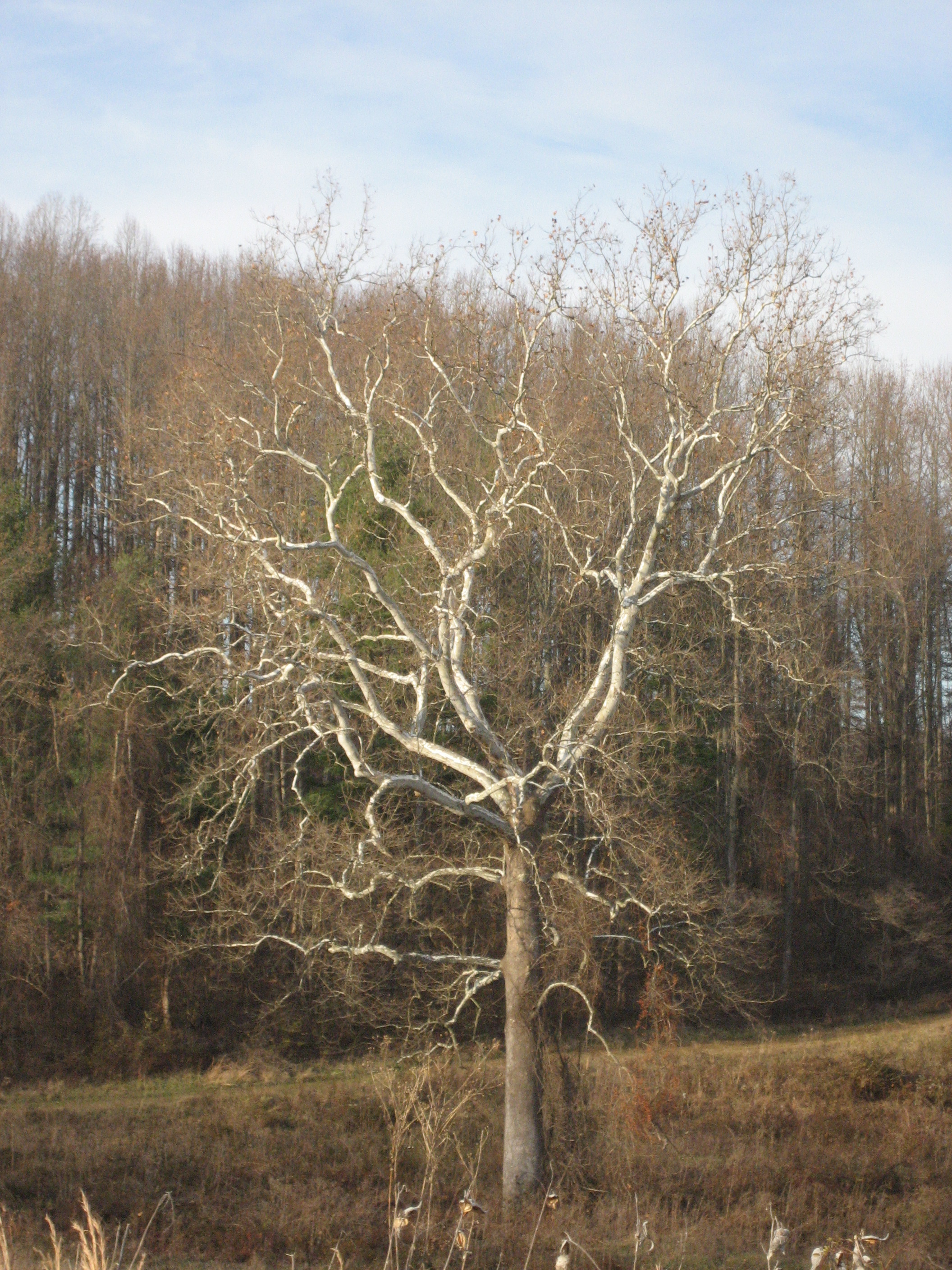
American Sycamore

salvation

© 2012 S. D. Stewart

Rage simmered and eventually overflowed in the library when I found only two of eight books on the shelf (Endgame and 77 Dream Songs [depicted as that glowing white brick at the bottom of the pile]). There was one Virginia Woolf book on the fiction shelves. One! Do you know how many the library owns? 22!! When I harassed the librarian about the library’s practice of storing books out of public view without indicating their status in the public catalog she shrugged off my indignation with some syrupy party line about the many hundreds of thousands of books in their collection and the sheer lack of space. “The general rule is if a book is five or six years old, chances are it will be in storage.” Yes, I understand the need for storage when you have such a meager number of shelves devoted to fiction in a library serving a population of over 600,000 people! But please, for the love of everything that is decent in the world, the least you can do is flag the books in the catalog that are not on the shelf! I cannot assume a book is in storage and go directly to the desk because what if it is not…then I look like an ass. Besides, the librarian in the Humanities Department always checks the shelf anyway. Not to mention the tragic loss of browsing capability. I don’t always know what books I want. I want to handle them, to caress their covers, to whisper sweet nothings into their bindings. When I brought this up it was met with a vacant stare and an empty smile. So much for a user-centric attitude.

the bus to paradise passed me this morning

Some people never stop talking about their plans. They are dead serious. Just you wait, they say, as if they know you are already silently doubting them. Or perhaps it’s because they’ve been scoffed at so frequently before. Regardless, their plans are solid. However, according to my own sloppy research conducted using keen observation techniques backed with unscientific predictive modeling, these people never actually go through with their plans. But…there are questions. Is it the constant talking about the plans that keeps them from hurling themselves off a bridge? Does the mere daily mention of these grandiose plans sweep away the dark cloud of futility hovering nearby? Are they in denial? Does the bus to paradise ever stop to pick up these passengers?

Other people keep quiet about their plans. They may mention them in passing on occasion. But there is no big to-do about it. When you ask them about their plans they are sometimes evasive. Rarely do they go into details. It’s as if they don’t want to curse the plans by talking too much about them. In the meantime, we grow complacent about these people. We expect them to remain in stasis. Sure, in the back of our minds nests that tiny kernel of knowledge that these people do indeed have plans. But the infrequent or even non-mention of the plans lowers our guard. Therefore, when these people suddenly follow through on their plans everyone is flabbergasted. How did they do it. We didn’t even know. She seemed so quiet. He kept to himself. And no, I’m not talking about mass murderers, although it’s possible the same theory applies. When did these people get on the bus? Were we not looking when they slipped out the door, paid their fare and boarded?

Are you ever overcome by a feeling of being left behind? All my life I have plunged forward with only brief stays in the morass. But the longer one lingers in one place, the more departures one suffers. Now, I certainly understand the value of living in the present and how that factors into this discussion. I’m not interested in plumbing those depths for the eight thousandth time. I also recognize that I am a person to whom satisfaction does not come easily. I’ve made a lot of progress in coming to terms with this. As part of the process, I’ve developed my own specialized coping skills (note: available for hire). This is what we’re supposed to do as we get older. Learn how to live the day-to-day. If we don’t, there is trouble.

I fear this has now veered off-course. I did not intend to get confessional. Let’s blame it on the bus, broadcasting its glowing word of promise above the driver’s head, passing me by as I neared my destination, teetering on the edge of the always tenuous cliff of Monday morning, hastily rigging together the tatters of my ragged hang glider, preparing once again for a flawless take-off into the unknown.

mystery of the annes

Question. Do all the Annes mean something? For many years now, I’ve been adding Annes to my favored author list. It all started with Annie Proulx (AP) and her novel The Shipping News. I moved on from that novel to reading most of her other fiction, both short and long. AP is primarily a Western writer, and her characters are often fringe types, loners, roamers, outsiders. I read her novel That Old Ace in the Hole when I lived only a few hours from the Texas Panhandle region where it was set. I read a lot of her fiction when I lived out there in North Texas and it helped me a little bit to understand my own place as a loner in what I saw at the time as an unforgiving open land.

When I moved here to Baltimore, I started reading Anne Tyler (AT) novels on a sporadic basis. I’ve probably read about 10 of them by now. I wanted to read AT because her books are usually set in Baltimore. I’d never lived anywhere before that also happened to be the specific setting for a writer’s books. It added a special extra thrill to the reading. AT’s characters, much like AP’s, are often loners and oddballs. Often in her books these loner oddballs find other loner oddballs to be with, although not without encountering much difficulty along the way. Reading her books always puts me in a strange headspace, yet one that also seems familiar because of all the Baltimore references. I enjoy this.

The third literary Anne to enter my life was Annie Dillard (AD). I fell in love with her writing immediately. I began a mass consumption project. I’ve read most of her books by now, although I’m saving a few for the future, mostly because AD has alluded to the probability that she won’t write another book (too much reading to do, says she). The ones I’m saving are her memoir and her two books of poetry. I started the memoir once but it didn’t click. The same thing happened with her first novel, The Living. I tried hard to get through it but eventually realized I was bored and didn’t care what happened to the characters. That’s always a sign for me that the book isn’t working and it’s time to put it down. I thought maybe AD’s fiction just wasn’t for me, but then The Maytrees came out and proved me wrong. Still, it is her nonfiction that captivates me most. I know I will be rereading much of it, despite my general tendency not to reread books.

Now along comes Anne Sexton (AS) and Anne Carson (AC). I’ve read more of AC than AS at this point, and I can say that I’m already enthralled with the former while still plumbing the depths of the latter. What I like most about AC is her mixing of genres. A book of hers can contain poems, essays, opera librettos, screenplays, and various bits of unclassified text. I get the sense that she does not force herself into formats that her thoughts don’t want to go. As the writing flows, it begins to take form. None of this, I’m going to sit down and write a poem now. Despite the intimidation I feel at her stunning intellectual prowess, her writing still feels liberating and accessible to me. It feels like reading an academic treatise but without the formal constraints that usually come with such writing. She pulls from so many disparate sources and ties it all together so it makes perfect sense, although often only if I read it closely.

So what is it about the Annes?

Other inputs: My sister was born an Anne and now goes by Annie. She reads a lot. When I first moved to this city my best friend was dating an Anne. I had never seen him so happy. I thought they might make it. But sadly they did not.

Anne is the French form of Anna, which is a form of Channah (or Hannah), a name used in the Latin and Greek Old Testament. In Hebrew the name Channah means ‘favor’ or ‘grace,’ or more specifically, ‘He (God) favors me’. The Book of Luke, in the New Testament, mentions a prophetess Hannah who recognized the child Jesus as the Messiah. Anna became a popular Western Christian name during the Middle Ages because of Saint Anna, the mother of the Virgin Mary. Anne is still a popular name in France. In England it is also commonly spelled Ann. Various forms of the name appear in most Western and Eastern European nations, as well as Russia.

My aunt’s name is spelled Ann, and she is the daughter of Irish immigrants.

I’m sure we all recognize patterns in our lives. I try not to ignore them. Sometimes they are ones yawning behind me I want to avoid in the future so I try to learn from them. Sometimes they are merely part of life’s effluence. And sometimes they appear to be mystical messages encrypted and in need of decoding. I feel like I am in constant search of a decoder ring.

possibility of foam

If buried all but traceless in the dark in its energy sitting, drifting within your own is another body—Anne Carson, “Seated Figure With Red Angle (1988) by Betty Goodwin”

There is something about living in a city, and it has to do with the surroundings being artificial, constructed by humans. Here we sever ourselves from real nature. Here what nature there is persists under duressit may even seem to be a thriving minority, but it will always be the minority. The muted signs of seasonal change vagulate. The constant reminders of the hubris of so-called civilized people swarm in smothering tones. Callousness blankets us. The automobile serves as master and slave. I am concerned.

There is another body inside of my body.¹ And it is drifting. And it is all but traceless in the dark. Whose body is it. Is it mine. Or does it belong to someone quite different.

It is an unfortunate thing to recognize that you are not one who is meant to live in such close proximity to other humans. And yet here you are, aren’t you.

John Stabb from Government Issue sang:

In that comfortable rut again
Goals for the talking man
Outside lies a presence
But a lonely spirit’s walking rut

And he can’t get out
Man in a trap

Deeper things getting direct
Empty social life’s a wreck
Weather and insects tonight
Happiness in black and white

And he can’t get out

Sometimes we come to embody the lyrics we listen to in our youth. This is neither here nor there. It is life. I think we’re all a little bit surprised when we get there. Or here.

Let’s find more creative ways to fail. And write about those ways in more creative ways.

Anne Sexton wrote:

The silence is death.
It comes each day with its shock
to sit on my shoulder, a white bird,
and peck at the black eyes
and the vibrating red muscle
of my mouth.

Anne reminds us that silence can be as menacing and intrusive as noise. A reminder that we are all out here flailing about. And some of us don’t make it. Like Anne herself. Some of us sink beneath the surface, our lungs filled with shards of the little brittle things in life. The ones that drifted beyond our reach, slow or quick, only to be breathed back in with fatal heaving breaths.

Recently I spent a fair amount of time writing up a review of a show I went to the other night but I lost interest. It suddenly seemed unimportant. Literally as I was writing it, I felt the words spelling out into nothingness. The only point of interest remaining when I finished was a question: What do we want from our rock stars? And do we even want them to be stars? I don’t go to see live music much anymore and rock music even less so. But this question startled itself into my mind and would not leave. Music once loved can be tainted. And how a band presents itself to its audience can either win me over or leave me cold. These are the lessons I learned. Outside the womb can be harsh.

There is foam² spilling out here. As winter prepares to wrap us in its icy sharp arms, I am awash with foam. And it may never dry.

___________________________________________________

1. See also: this post

2. For more on foam, see Anne Carson’s essay “FOAM (Essay with Rhapsody): On the Sublime in Longinus and Antonioni,” originally published in Conjunctions 37 and reprinted in the book Decreation (2006).

  • Recent Posts

  • Navigation Station

    The links along the top of the page are rudimentary attempts at trail markers. Otherwise, see below for more search and browse options.

  • In Search of Lost Time

  • Personal Taxonomy

  • Common Ground

  • Resources

  • BOOKS BOOKS BOOKS