digging in the shade of the vowel tree

Sylvia Plath wrote of
intolerable vowels
entering her heart
but what of ruthless
consonants headed
to our brains.

We all know about a-e-i-o-u and sometimes y. They may be intolerable but their numbers are small. And they are more easily made to do our bidding. The consonants, in contrast, are legion and their rigidity stifles. Perhaps the only way to harness their true power is to one-by-one start taking them away.

Anna Kavan wrote:

I had only learnt how to be friends with shadows; it might be too late to learn the way of friendship in the sun.

Friendship in the sun is a mirage. The way to it is false. The sun fades color and one day it will kill us all. Shadows make easy friends: we pass through them as they do through us. Few stay long. It is their nature. Sometimes it feels like it is in all our natures to expand and contract, pull away and grow close, like a squeezebox played by a jittery ghost.

Kafka wrote:

No one will want to lie in clouds of mist with me, and even if someone did, I couldn’t expel the mist from my head.

This gets at the heart of the problem, I think. One feels an isolation and maybe a desire to connect, sometimes even a desperate mania. But who can share a dreamy solitude? By definition, no one. And if it was at all even possible, the mist remains. How could we find each other. How could one’s dream self operate in reality? The pilot seat in your head is unlike the one outside of it. Out there, we cannot twist the knobs, adjust the instruments without consultation, without repercussions, without the sun blinding us. In the shadows, the mist, these difficulties melt away.

Jung wrote:

A man can hope for satisfaction and fulfillment only in what he does not yet possess; he cannot find pleasure in something of which he already had too much.

Yikes, Carl, that’s bleak, even by my admittedly generous standards. In fairness, on the next page of Modern Man in Search of a Soul, Jung also states: “The needs and necessities of individuals vary. What sets one free is for another a prison.” So I guess one could argue that for some people overindulgence sets them free, although I don’t think that’s his point with the former quote. I think it is about anticipation. Jung is talking about this concept in the context of the development of analytical psychology, and yet it stands out in the text as such a sweeping statement. But I don’t think this aphorism or whatever you want to call it can be universally applied. Certainly competitive eaters don’t find pleasure in the 18th hot dog in a row that they’ve shoved down their throats. But can Jung honestly think that attaining the love of another person does not lead to satisfaction and fulfillment? I mean, I will grant him that unrequited love is an exquisite thing, and possibly more intense on the whole than many long-term relationships. But no satisfaction and fulfillment for those in love? I don’t know, maybe he is not including love or other emotions here. Maybe he is referring strictly to material things, in which case I willingly concede his point.

Édouard Levé wrote:

The full weight of depression comes on between 1-5 PM, particularly when I am home by myself. Mornings and night are more filled with promise.

Filled with promise. Is that what we are after? Moments filled with promise? Is it merely the anticipation we crave, what Jung says we can find satisfaction and fulfillment in? Anticipation can be tantalizing, I’ll admit. But how. How can we be satisfied with mere promise. Inherent in promise is a pledge to fulfill at some point in the future, not at the moment of the promise. Like an IOU. Is it the step we take to accept the promise that is meant to satisfy? Is it the mental and/or emotional trust fall we allow ourselves to take? If so, what of broken promises. Do those negate the previous gain in fulfillment? Well, do they, Jung? If he were here, I’d have more than a few questions for him.

Levé also wrote: “Above a certain height I like what I see. Below it I don’t.” I suppose we can read this on a literal or a metaphorical level. What is the certain height. And is it a chronological point, a philosophical one, a spiritual one. Who knows. I think we can safely say, though, that whatever the certain height represents, it changes between individuals. Remember how Jung said what sets one person free is another person’s prison.  Some people don’t like what they see above a certain height, while others crane their necks for a peek. Some spend their lives craning for that view, but some are content to not look. They don’t want to know…they look away in fear, shame, embarrassment, whatever.

So what is the conclusion. Is Kafka’s mist the same as Carson’s foam? Sometimes it’s a strain to make all the connections. Certainly reading and writing are key decoder rings. Endless battles, ceasefires, sneak attacks, and truces with the vowel and consonant armies. And maybe the ladder stretches high enough to see above the mist. I think others have ladders high enough, too. If we squint hard enough we can probably see each other, mouths flecked with foam, across the scorched battlefield strewn with bloody words and mangled sentences. Hello there! I do not have rabies. I am merely seeking the sublime. Perhaps you’d care to meet in the mist and discuss for a few moments. I’ll be waiting.

hangman with cold fire

© 2012 S. D. Stewart

 © 2012 S. D. Stewart

prairie dog towns: a case study

I never knew if the prairie dogs could leave. They lived in a town inside a park inside a town. There was a fence around their town. It was not a high fence but prairie dogs are not tall. They do burrow, though. That’s one thing they’re known for—building tunnels. So the question for me remained: why didn’t the prairie dogs leave? How far underground did that fence go? Had any of them tried to burrow out, only to encounter the fence? To the untrained eye (mine) they looked content. But I didn’t trust my untrained eye. There were young ones and old ones, so clearly they were procreating. But was there a carrying capacity to this confined town within a park within a town? If no prairie dogs left, would the population not eventually reach this capacity, leading to a crash or other dire consequences? Did the Parks & Recreation Department even have a strategic plan?

Meanwhile, in a nearby state there was another prairie dog town inside a park inside a town. But these prairie dogs were free-range, and their town spread out across acres of parkland. It was a decentralized town, difficult at first glance to even conclude that it existed. The prairie dogs themselves were also less obvious to the naked eye, though apparently no less active according to one news source that named them as likely suspects in an electrical cord chewing scheme plaguing this year’s Christmas display. In fairness to the prairie dogs, though, human vandals were accused of playing an even more significant part in this tragedy. The implication in the article was that the humans knew better.

The other town, the one in my town, was quite elaborate, much more concentrated, presumably as a consequence of the prairie dogs’ confinement. They built up instead of out. It was an odd thing, really, with the fence around it being only a few feet high. The lower part of the fence was made of chain link so the prairie dogs could look out and visualize their freedom. I wonder how the jailers knew what height to build the fence. If three prairie dogs stood on each others’ shoulders the top one could easily leap over.

This Just In: Cursory online searching yielded an article from earlier this year that says some of the prairie dogs have begun to escape from the confined town! The Parks & Recreation director said the fencing is original and is believed to extend to a depth of five feet. But the fence is deteriorating and the city doesn’t have the money to replace it. Note: due to the horrid quality of this article I refuse to link to it. In fact, if anything, my recent superficial review of online regional news outlets from this part of the United States has made me thankful for having put such a great distance between it and me. Apparently, in that part of the country one doesn’t need to be literate to find work as a journalist.

What I wonder is how one town in a region decides to confine their park-dwelling prairie dogs while another town does not. To me this indicates a fundamental difference in world view, and yet having visited both places (and lived in one of them), I would never have guessed that the authorities would be at such polar opposites when it comes to dealing with potentially destructive ‘critters,’ as one diligent reporter so endearingly referred to them. In the free-range town, the Parks & Recreation representative displayed a surprisingly blasé, perhaps even a live and let live, attitude toward the prairie dogs. In the other town, however, the parks director made it clear that the animals were there for public display and the popularity of this display would drive the town to secure funds necessary to fix the fence. This, in my opinion, would be the expected point-of-view in that region, a place where most people consider animals to be: (a) something to eat; (b) something to shoot; and/or (c) something to be confined for the amusement of humans. However, I was apparently not thorough enough in my highly amateur and flagrantly qualitative anthropological research. Although I regret the oversight, I still expect this shoddily constructed case study to ensure my continued membership in the esteemed Society for Purveyors of the Unscientific Method.

fragment 4.5 (december dirge)

This block smells like a funeral home,
the next one like a tumble dryer.
Out here at night I feel as though
I’m laundering with the dead,
who are buried in their best
but when walking around
after being underground
might want to freshen up.

the town

The highest point of the town held a water tower and once I rode down that hill on my scooter using my new shoe as a brake and when I reached the bottom I found the scooter’s tire had burned a big gash into the heel of my shoe.

The lowest point of the town held a lake and once I stubbed my toe in its silty bottom resulting in a trip to the doctor who poked holes in my toenail to relieve the pressure.

The town took away and it gave and it took away and it gave, sometimes it left parts of itself in me, parts that had to be removed, other times the parts remained encysted and grew into hard black stones that never went away.

The town visits me now, frequently, in my dreams. It is the setting for all types of absurd scenarios, completely unrelated to actual events, only tapping memory for details of setting, and even then playing sly with the facts, bending and shaping, but always leaving things just recognizable enough.

I find this unsettling as the town means nothing to me in my present life and I have not been there in many years. There is nothing there for me now. And yet it is the skeleton of my early life. The streets are the bones. There is a house somewhere that serves as the skull, with windows like eyeholes, looking out onto a world I was seeing for the first time.

I feel a pull toward the town and I don’t know why. I think it is the aching for a home, a place I know so well it is a part of me, inseparable from who I am and what I do. A known setting for my life, however I choose to live it, with scenery grown like vines through my blood and bones. The place where it all starts and ends. Home.

light | dark

Light Dark Light Dark Light Dark Light Dark Light Dark Light Dark Light Dark

Light Light Light Light Light Light Light

Dark Dark Dark Dark Dark Dark Dark

LIGHT

DARK

DARK

LIGHT

[narrator leaves house, unpacks moon-viewing instrument]

LIGHT LIGHT  LIGHT LIGHT

[the ‘light’ from the moon is false — it is a reflection of the sun]

DARK DARK DARK DARK

[narrator adjusts focus, lets in more light]

LIGHT dark light

LIGHt dark lighT

LIGht dark ligHT

LIght dark liGHT

Light dark lIGHT

light dark LIGHT

[narrator goes inside, observes black ring around eye, laughs bitterly]

DARK light DARK

[narrator watches solar eclipse on television, loses vision in one eye]

one eye: DARK DARK DARK DARK

other eye: LIGHT LIGHT LIGHT LIGHT

[other eye compensates, dilation lets in more light]

LIght DARk LIGht DArk LIGHt Dark = dark | LIGHT

[narrator freaks out at giant pupil peering back out of mirror]

LIGHt dARK

LIGht daRK

LIGHt dARK

LIGHT DARK

[narrator takes sedative, falls asleep]

D-A-R-K

[narrator sleeps for days, dreams about moon]

D–A–R–K     l-i-g-h-t

[narrator stands on moon in dream, looks at sun, falls asleep in crater]

D_A_R_K

[narrator feels hot, wakes up on sun, quickly returns to sleep, wakes up on earth]

L_I_G_H_T

[narrator applies eye shadow, begins collecting shiny objects]

light light light light

[narrator sprouts bushy tail, gathers nesting material]

dark light dark light

[narrator curls up in ball, falls asleep in nest]

DARK DARK DARK DARK DARK DARK DARK

[narrator dreams about the sea]

LIGHT | DARK

[narrator wakes in forest, burrows deeper in nest, falls asleep again]

DARK | DARK

[narrator dreams of monks self-immolating, twitches in sleep]

L__I__G__H__T | dark

[narrator wakes, crawls out of nest, forages on forest floor]

L–I–G–H–T

[narrator lies on a rock, soaks up sunlight]

LIGHT LIGHT LIGHT LIGHT

[narrator leaves dark, enters light]

L____I____G____H____T

inside a person another one

this life in parallel there’s always been, inside a person another one, what do others do, deny it i guess, or maybe it’s not there, for them it’s not there, and i see it all before me what will never come but what has happened, what is happening, inside a person another one, it’s been there all along, and it keeps growing, keeps expanding, so many layers, painstakingly detailed scenes, every time some spark strikes, the line of tinder crackles, the fuse is lit, i can’t put it out, i could never put it out, there are ways to try, and i know some other ways i’ve seen others try, each one ends the same way, we all know how it does, yes, we do, and do you know how when you’ve done things so often, day in and day out, and then one day you do something a little different and it throws you off, it pushes you off onto another track, but not enough to shift you into the parallel life, no, not that far, just enough to make you stop for a minute and think about it all, about that other life and where it’s going, the people in it, the way they’ve come into being, likely so different than how they are in this life, the way you act, the way they act, whatever happens, and what if the two converged even for a day or just an hour, what then, what then for the person inside the person, the two people now, who looms larger, a dried-out husk of aloofness wraps around the hot soldering iron trapped inside, look out, fire hazard, i smell smoke, i’ve seen the others burn themselves up, i know how it all ends, it’s near halfway and i see the hazy shapes down below resting on the sea floor, so many split halves, so many discarded broken parts, a graveyard of misshapen lives.

every morning

[click image to read]

© 2012 S. D. Stewart Erased from Chapter XIII of Nerves and Common Sense (1925) by Annie Payson Call

news from dream life

Last night I had a dream where, in answering someone’s question, I referred to a place that to my knowledge only exists in my own dream life. The place is a park with a campground that was the setting for an epic dream of many months before. This is the first time I can recall this happening and I woke up feeling exhilarated over this advancement in my dream explorations. I think it represents real progress. I have been reading Anna Kavan’s book Sleep Has His House at night before I go to sleep and I now wonder if it is influencing my night-time life.

what i saw today

© 2012 S. D. Stewart

Evidence of beavers.

© 2012 S. D. Stewart

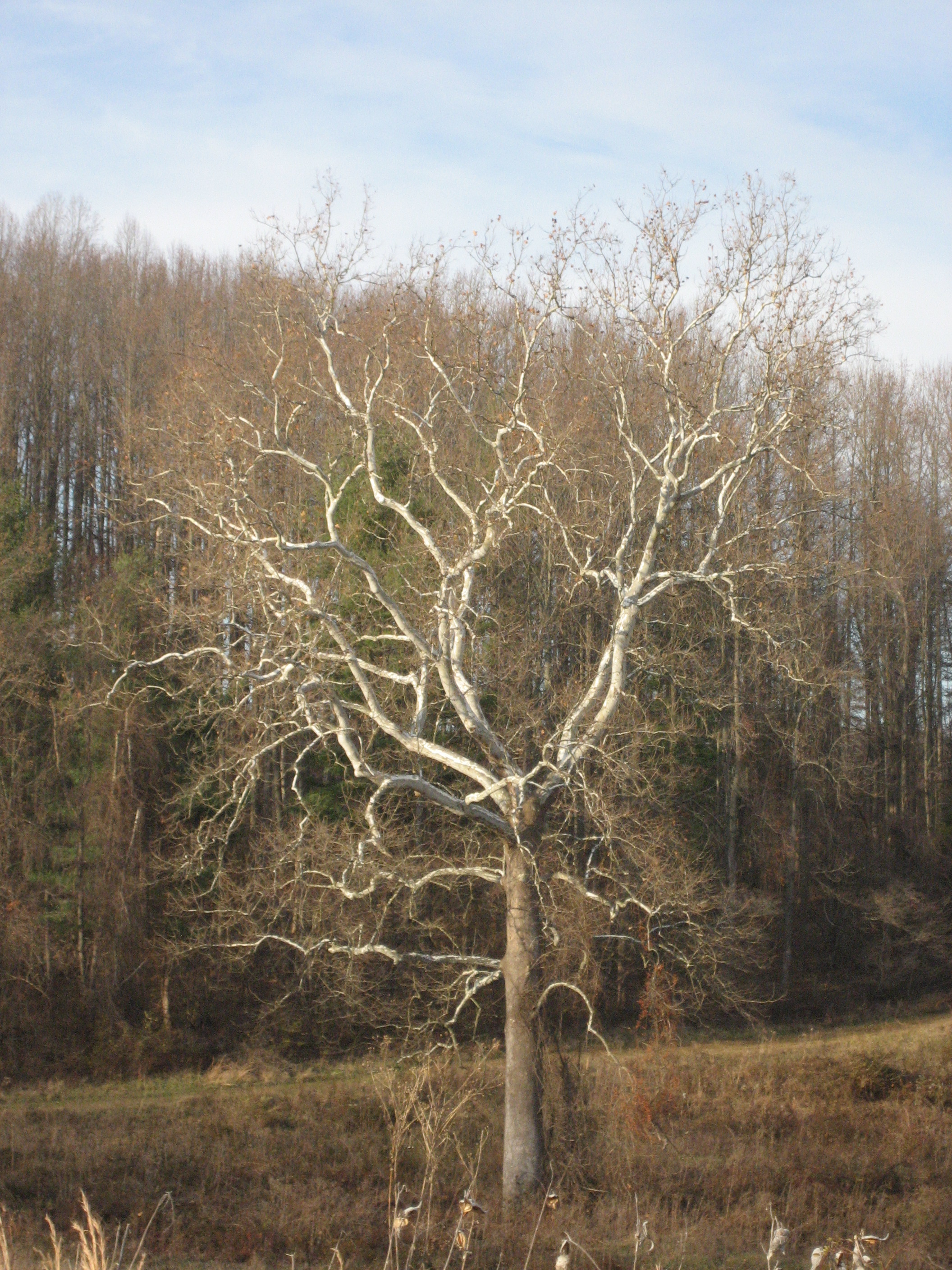
American Sycamore

  • Recent Posts

  • Navigation Station

    The links along the top of the page are rudimentary attempts at trail markers. Otherwise, see below for more search and browse options.

  • In Search of Lost Time

  • Personal Taxonomy

  • Common Ground

  • Resources

  • BOOKS BOOKS BOOKS