
Just heard my first cicada of the year! Summer has officially started. Just in case the blistering heat around here hadn’t already tipped everyone off.
When does fall start again?
Just heard my first cicada of the year! Summer has officially started. Just in case the blistering heat around here hadn’t already tipped everyone off.
When does fall start again?
Posted by sean on June 22, 2012
https://sd-stewart.com/2012/06/22/new-arrival/
Yesterday I rode my bike to Lake Roland, a favorite Friday activity for several years. As always, I entered through the pine barrens section of the park. This unique area speaks to me; the sweet pine fragrance in the air and the low volume of human traffic combine to make an ideal haven for this solace-seeking pilgrim.
Here is the beginning of the trail leading into the pine barrens:

I have been paying more attention to the abundant insect life while out in the woods. I don’t know if the Odonata species (dragonflies and damselflies) this year are more prolific but they’re catching my eye more than usual. I tried to capture a few shots before my camera’s battery died. The photos are unfortunately not so clear because I digi-binned them (i.e. used my point-and-shoot through binoculars). It’s incredibly difficult to keep my camera hand steady while shooting through binoculars. I would love to get a nicer camera, but that’s going to have to wait. There are 177 confirmed Odonata species in Maryland, and I can now identify two of them. I have a long way to go, but plenty of time.
Note: there are a few basic differences between dragonflies and damselflies. In general, damselfly bodies are narrower, while dragonfly bodies are thicker. Most damselflies also fold their wings over their bodies when perched while dragonflies keep them spread out. Damselflies also have eyes that are clearly separated, while dragonflies have eyes that are close together, and typically meet in the middle. Of the two species below (the first two photos are male and female of the same species), can you tell whether they are damsels or dragons? No cheating with Google, either…
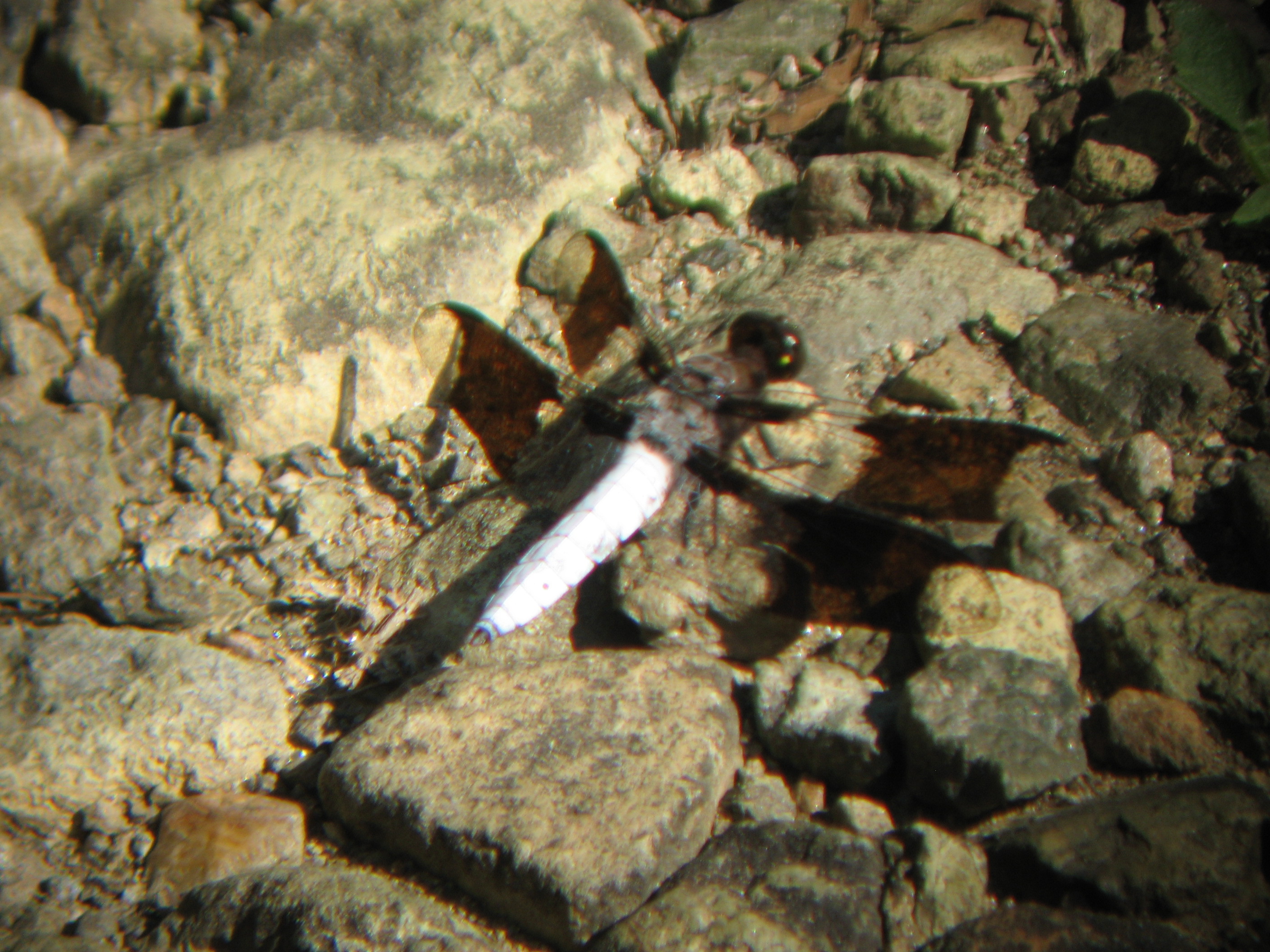
Common Whitetail (Libellula lydia), Male, Lake Roland, Baltimore County, MD

Common Whitetail (Libellula lydia), Female, at Lake Roland, Baltimore County, MD

Ebony Jewelwing (Calopteryx maculata), Male, at Lake Roland, Baltimore County, MD
Posted by sean on June 16, 2012
https://sd-stewart.com/2012/06/16/pine-barrens/
Sometimes I’ll turn around and my dog will have almost his entire leg shoved in his mouth. This gives me great pleasure. His entire body is just one big toy to him. Don’t even get him started on that pesky tail.
It’s hot here and I remember now how I tend to lose my faculties in this type of heat.
Dream journal entry from last fall:
“I took a nap in the afternoon. I dreamed a fly flew in my mouth and I woke up choking on it. I fell asleep again and was dreaming about eating sesame sticks out of a bag when I realized there were flies in the bag and I may have eaten some. I woke up and there weren’t any flies around. It’s November.”
I vaguely remember that flies in dreams have a certain meaning but I’m afraid to look it up because I think it might be bad. I rarely try to analyze my dreams, although I’m not averse to the idea. I just haven’t explored it much.
Posted by sean on June 10, 2012
https://sd-stewart.com/2012/06/10/can-you-fit-your-leg-in-your-mouth/
Ah, summer in the city, my least favorite time of year here. Yesterday I got my first “Hey buddy, lemme borrow your bike!” [Does anyone actually fall for that?] Then this morning while watering the garden I received my first mosquito bite, courtesy of the invasive Asian Tiger Mosquito, the bane of my summer existence. Soon I will not be able to enter the yard without being swarmed and bitten to my near death. Trickling in on the email lines are the initial reports of random acts of violence committed by hordes of savage bored youth. Calm evenings on the deck are shattered by the incessant hovering and circling of the city’s police chopper. I try to block it all out and dream of living in a tree fort in the middle of an expansive tract of old growth forest. I fail regularly. But sometimes I succeed.
Posted by sean on May 25, 2011
https://sd-stewart.com/2011/05/25/hot-ugly-times-are-acomin/
Ever since I was a boy, I’ve been marked by members of the blood-sucking insect world as a particularly tasty food source. I’m not sure why exactly every blood-sucking insect is drawn to me, but I suspect that my easily accessible veins have something to do with it. Some have dismissed this theory, claiming that insects aren’t intelligent enough to seek out those of us with veins closer to the skin’s surface, but my anecdotal evidence says otherwise. Others around me with deeper veins remain untouched while I serve as a feeding ground for the entire local mosquito population. I look at where the bites occur, and for the most part they are directly over the vein. So I’m willing to give those blood-suckers the credit where it’s due.
In the past, I’ve had run-ins with fleas. Apparently I’m allergic to fleas, but what that really means is that I’m allergic to their saliva. At one time I lived in a house where fleas also lived, unbeknownst to me. They began biting me during the night while I was sleeping. I’d wake with my ankles covered in welts. Flea bites are prone to infection, and while I took great care not to scratch the bites, they would often become infected anyway. During a several month stretch, I was put on antibiotics three or four times. I began sleeping in layers with socks pulled far up over my pants, despite the summer temperatures. Nothing I did seemed to stop them. I literally thought I was going to lose my mind. To say that my quality of life declined would be an absurdly gross understatement. I flea-bombed the house and yet the fleas lived on. I finally bought some powder online that was guaranteed. I had to move all the furniture and work this stuff into the carpet really good before vacuuming. I think that finally got them, but I moved out anyway.
These days the worst offenders are the mosquitoes. Have you heard of the Asian tiger mosquito? I had not made its acquaintance until recently, but apparently somewhere on my block there is a major breeding ground. I can’t linger outside my back door for more than three seconds without being bitten. The tiger mosquito came to the United States from Asia via the used automobile tire trade. These mosquitoes like to breed in water that pools up in used tires sitting around outdoors. Hooray, yet another scourge we can blame on car culture! These mosquitoes are like regular mosquitoes on steroids. Whereas other mosquitoes come out to feed only at dusk, the Asian tiger mosquito feeds all day long! Isn’t that great? So now I can’t even go out into my yard in the middle of the day without getting bitten at least six times. Another great thing about Asian tiger mosquitoes is that their bites last much longer on average than regular mosquito bites. I’ve found my bites from these fiends itch for several days, whereas regular mosquito bites usually fade rather quickly, often within the hour. Even more awesome is that these mosquitoes are like ninjas; you don’t feel them while they’re biting you so you can’t even attempt to stop them. They are also known to be particularly agile in avoiding being slapped.
Tiger mosquitoes breed in any containers holding water, and so have thrived in residential areas. Many of the birds and bats that consume massive quantities of insects don’t live in the city, and so there is not much in the natural world of the city to keep these mosquito populations in check. The best defense is not to allow water to sit outside in any type of container. But when you live in a rowhouse community, this presents a problem. You may prevent breeding in your own yard, but you can’t stop everyone else from letting water sit around.
My solution this summer has been to stay out of the yard. Lately, though, some mosquitoes have gotten into the house. They bite me at random times and I suffer quietly while they go sleep off the drunken stupor they’ve gained from gorging on my blood. Awhile later they return to bite me again. Eventually they die, I guess, but by then it doesn’t matter…they’ve done their damage.
I’m really looking forward to winter.
Posted by sean on July 31, 2010
https://sd-stewart.com/2010/07/31/mosquito-death-squad-now-recruiting/
On the outskirts of town, we stop at a used bookstore & antique shop. I pick up a reissue of Black Sun and Em Ell finds me an old Western shirt with snaps down the front. Twenty minutes later as we pull into our place for the week, I hear the first hermit thrushes. That night I crack open the book and read Abbey’s words in the first paragraph: “He hears the flutelike song, cool as silver, of a hermit thrush.” Fiction mirrors life, every single time. If it’s good and true, that is.
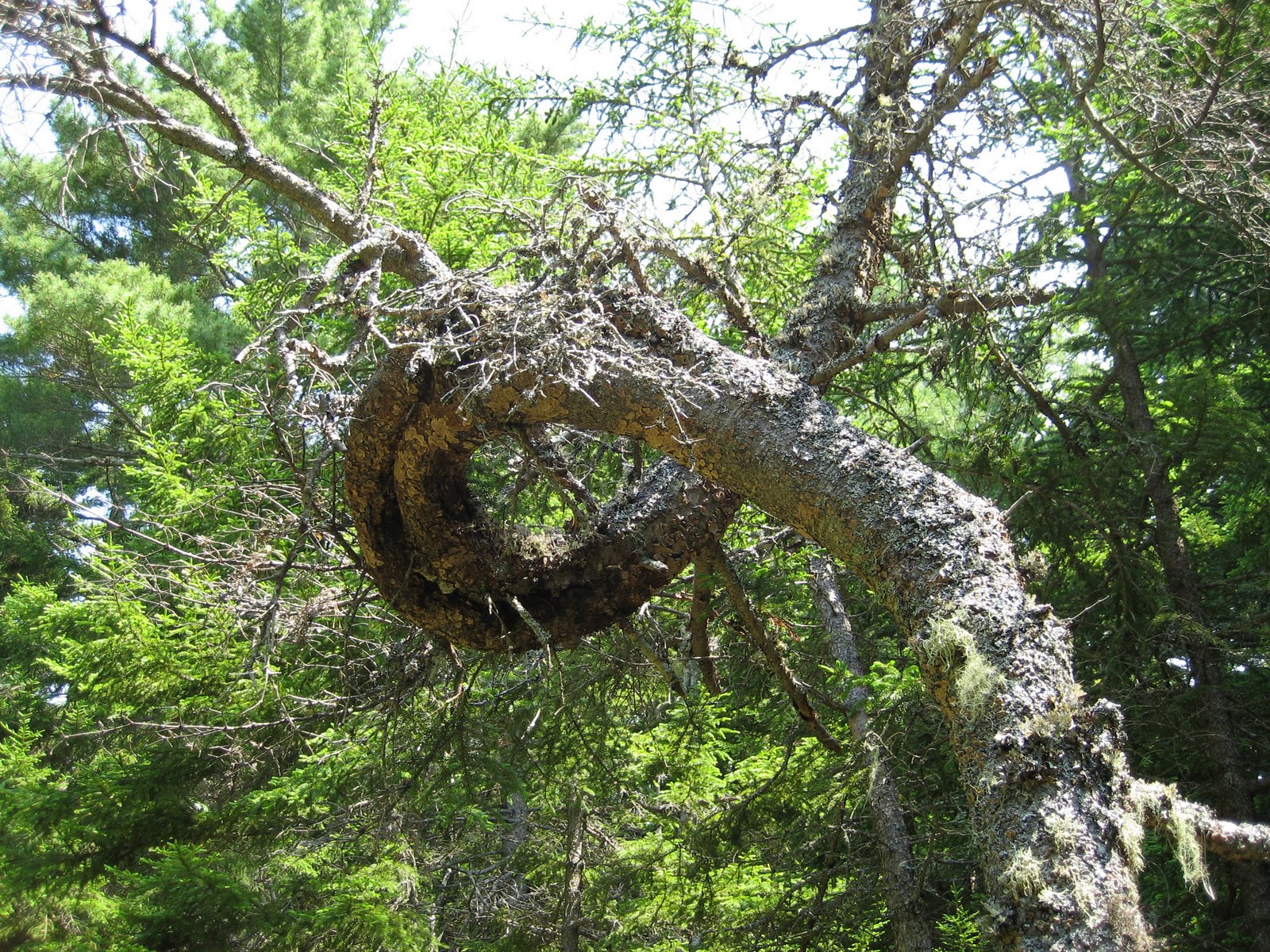
Maine’s natural beauty, both rugged and fine, bowled me over. I came as a pilgrim, seeking solace from the noisy, angry city streets, and I left a zealot, prepared to spread the gospel. Maybe better to keep it to myself, I thought later, though, don’t want to spoil a good thing anymore than it’s already been spoiled, which is surprisingly very little, as evidenced by views such as this:
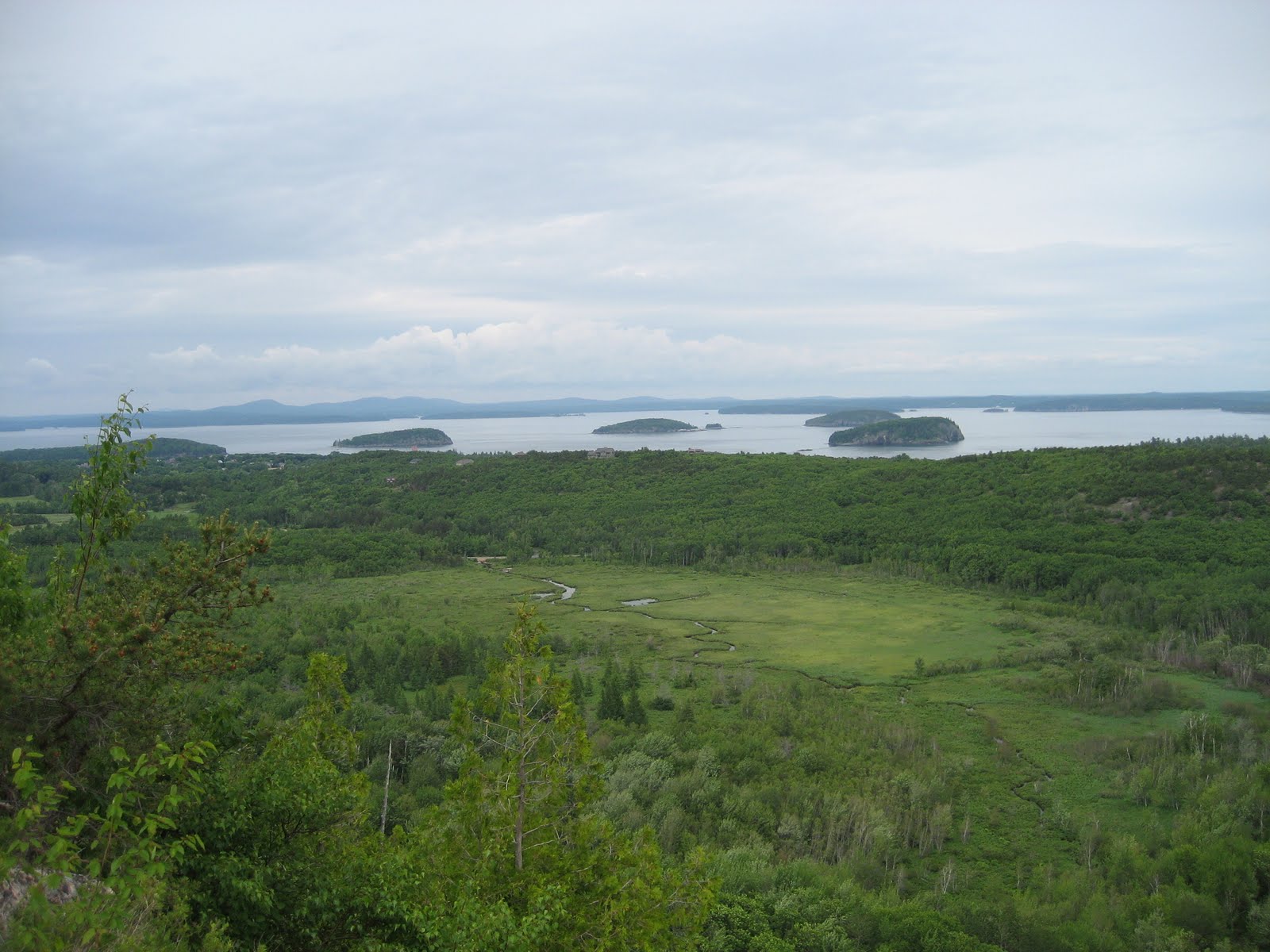
We explored by boat, by foot, by bike, by kayak, and again by foot. I saw and/or heard 62 species of birds (several of them were lifers), a little lower than my expectations, but considering I did very little dedicated birding, not bad by a long shot. We climbed in the mountains, topping out somewhere around 1160 feet. We kayaked with the loons and listened to their haunting song. This particular loon seemed unimpressed with us:

The one day I went out by myself specifically to go birding was cool and rainy. I woke at 6 AM to the sound of steady rain and almost decided not to go. I lay back down in bed, but I just kept thinking about how I am only in this place for one more day. So I went. At my first stop, deep in the park on the western side of the island, I found myself surrounded by ravens scronking their unearthly calls in the trees. I’d hear sounds like churning helicopter blades, and look up to see another raven flapping its wings, off to unknown places. I then found myself slightly off-track due to a confusing turn in the trail. So I returned to the car and drove on twisting gravel roads to the place I was looking for. I’d planned out this excursion using a birding guide to Mount Desert Island. This first place ended up a bust, though. There I was deep in the forest, and all I could find was a robin and some mourning doves. I can find those birds in my backyard any day of the week! But they don’t get to see this:

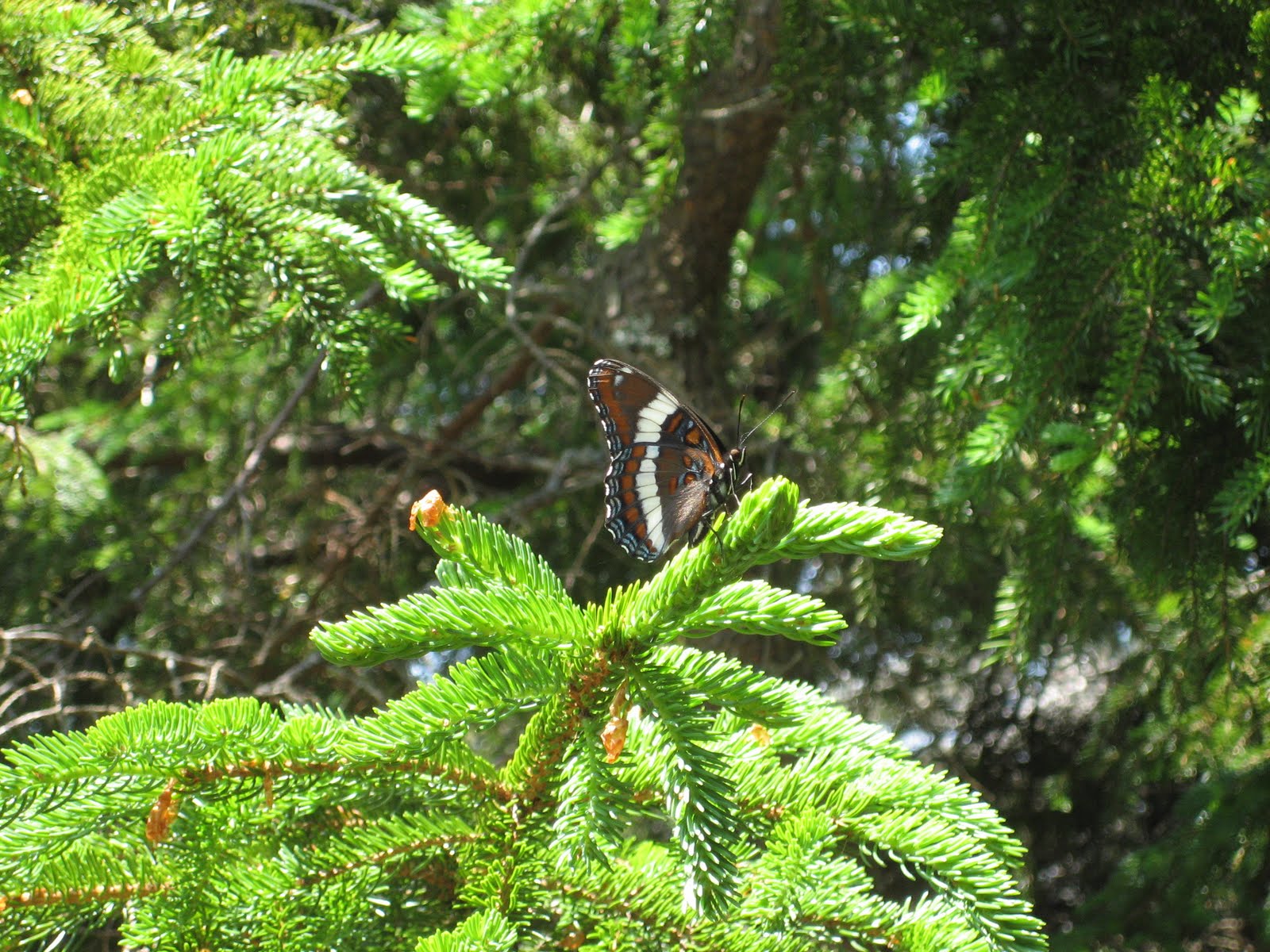
A curious thing about birding that you learn early on is that the most beautiful isolated places in the world are not necessarily the birdiest places. In fact, they are often not very birdy at all. Birders often find themselves hanging around water treatment plants, landfills, parking lots, and disgusting ponds behind shopping centers. Birds don’t care what a place looks like, per se, as song as their needs are met. On this particular day in Maine, I was experiencing this phenomenon. It’s hard to be upset at a lack of birds, though, when there is so much else to look at, such as this White Admiral butterfly.
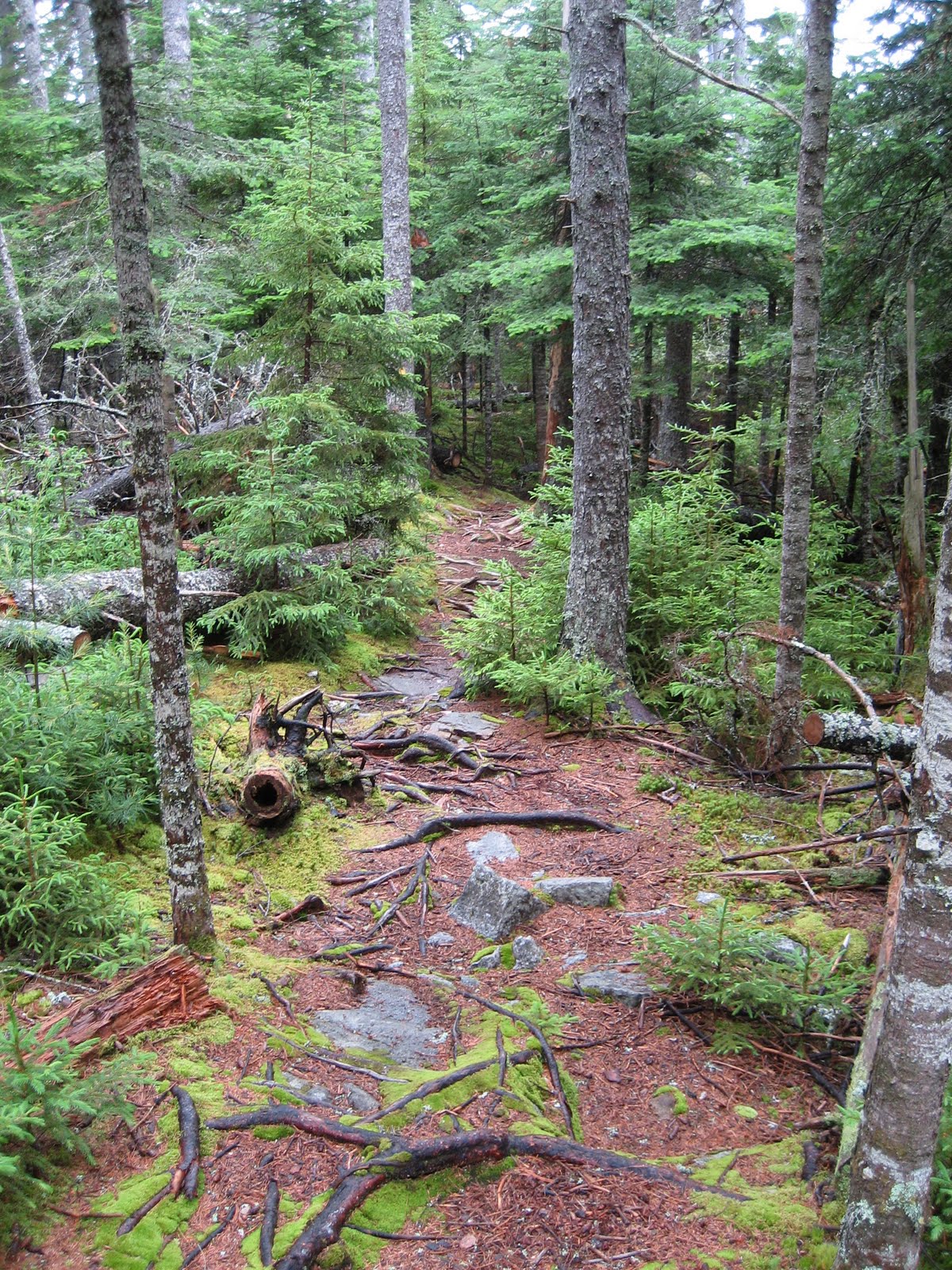
I left the forest and headed to the western coast, where I hiked in to some land preserved by the Nature Conservancy. This was a tract of towering white cedars, red spruce, and balsam firs that were untouched by the great fire of 1947. The trail, gnarled with massive tree roots, wound a circuitous route to the beach. When it opened up out of the forest, I found singing warblers, most very high in the trees. Busy woodpeckers worked the lower trunks. A winter wren trilled its bubbling song. I only lingered for a little while, though, as I’d already been out for several hours.
Later that day we explored the Wonderland and Ship Harbor trails in the southwestern section of the park. It was quite birdy there, and we saw a bald eagle land off-shore on some exposed rocks where a group of gulls was roosting. The gulls were none too pleased with the eagle and started dive-bombing it. I forgot the camera in the car during these hikes so I don’t have any visuals. But here is where we hiked to the very next morning:

After climbing mountains that last day, we returned to home base. I needed to reflect and absorb, as I felt the end of this time nearing and my state of mind already shifting. Near our place, at the bottom of a long cascading series of wooden steps lies a rocky beach. I go there, close my eyes and hear the tide wash in and recede. I open my eyes and see that large smooth stone on the beach as my soul, washed as it has been by the saltwater tonic of this place. I want to distill the salt-laced air, the fragrant pine boughs, the views of aching beauty, the hermit thrush’s song–take it all and fill a tiny bottle to carry with me and open to breathe in as needed. But the grains of my recollections will instead likely drift away over time in the stale winds of the day-to-day. Perhaps, though, if I concentrate hard enough, I can keep some of the uniqueness of what I saw cloistered deep within my mind, where nothing from the outside can ever destroy it.
Posted by sean on July 3, 2010
https://sd-stewart.com/2010/07/03/maine/
Some recent signs:
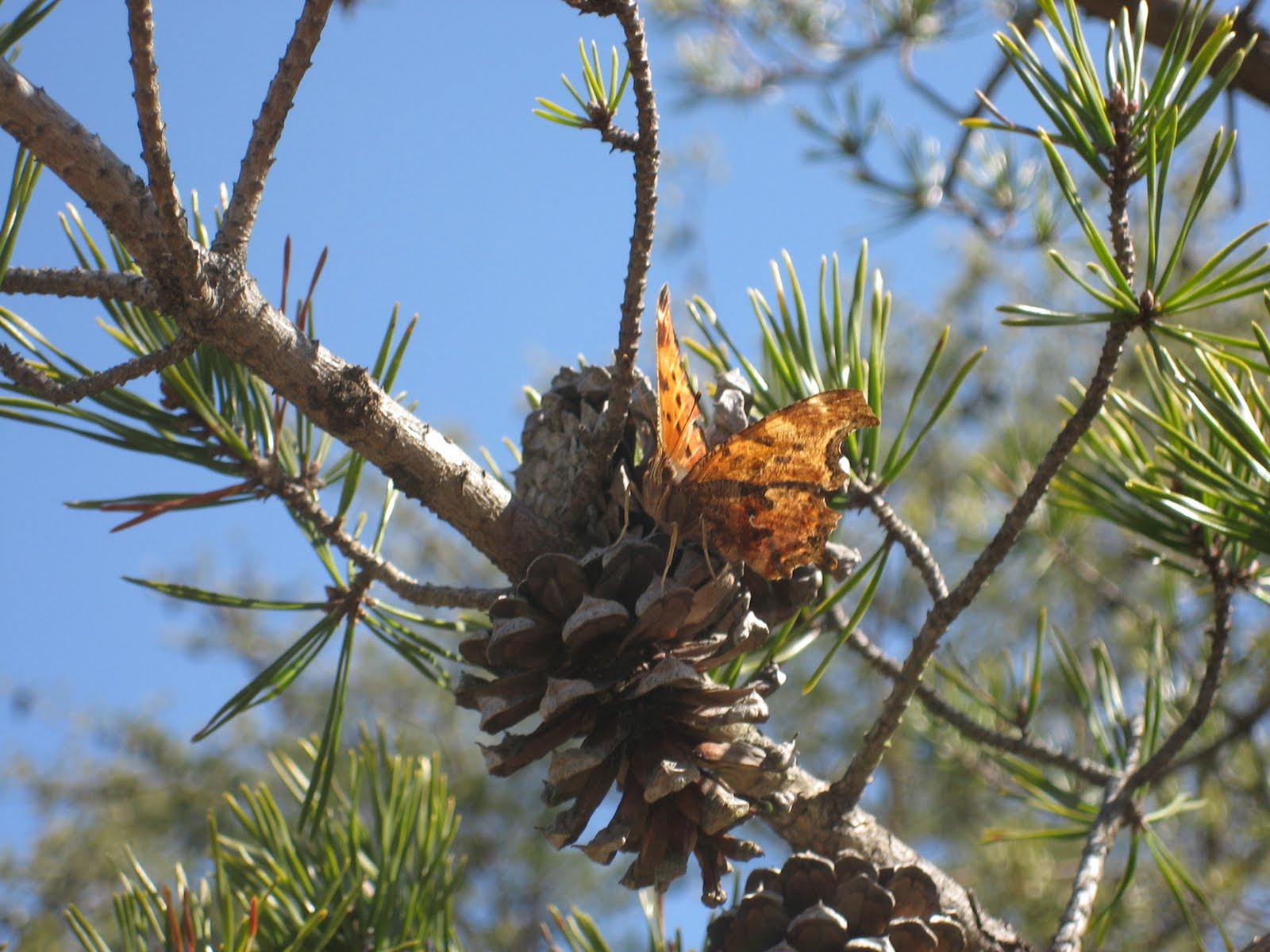
First butterfly sighting of the year…an Eastern Comma soaking up the sun in the pine barrens area at Lake Roland.
I observed in awe the sheer determination of this sycamore fruit that had poked its roots down through two inches of snow to find the ground below. Damn the snow! I will sink myself into terra firma, for I must grow upwards!

I picked apart another sycamore fruit that was lying nearby (there were many of them). Inside, it looked like this:

Meanwhile, a Song Sparrow sung mightily from the marsh area of the park. He was too far away for a photo, especially with my point-and-click, but the sheer jubilance of his song filled my heart with joy.
This morning, a juvenile Cooper’s Hawk eyed the feeder from its perch on the power line out back. Looking for breakfast, but the little birds were too smart. Someone must’ve tipped them off. The Cooper’s was a new yard bird, and hung around long enough for us to have a good long look.
Also, inaugural House Finches appeared at the feeder. A pair of’em. Not sure why we hadn’t yet seen this ubiquitous feeder bird. At the old house, they were probably the most abundant bird at the feeders, but until today we hadn’t seen a single one here at the new place.
Out front, a Song Sparrow rooted around under the rose bush.
On my bike ride to work: about 200 Canada Geese honking and flying in V formation, headed due north. I saw a similar sized flock yesterday morning. It gives me goosebumps…such a powerful and primal event to witness!
Cardinals sang in almost every block of my ride. And the grackles have grown much more vociferous with their strange electronic sounds. They’ve also been making daily visits to the feeder. I like to watch them drink from the bird bath because they have to point their beaks straight up in order to swallow. It actually looks quite elegant, especially when the morning sun catches their iridescent feathers just right.
Posted by sean on March 11, 2010
https://sd-stewart.com/2010/03/11/spring-has-come-a-knockin/

 s. d. stewart