the excavation of gil orlovitz

Recently I received the good news that a new volume of buried writer Gil Orlovitz’s poetry and prose is soon to be published. I’ve previously bemoaned Orlovitz’s fate on this site, as well as posting, at the time, the only known review of his experimental novel Ice Never F to be found on the internet. Now, champion of forgotten poets Rick Schober will be publishing a collection of Orlovitz’s early stories, poems, and essays through his one-man operation, Tough Poets Press. Rick needs our help, though! He’s started a Kickstarter campaign to cover the initial costs associated with getting this important anthology out into the world. Rick has done these campaigns before and he knows what he’s doing. All donations go straight into production. Take a look, read Rick’s biography of Orlovitz, and if you feel so inclined please give what you can! The book will be published June 7, 2018, the 100th anniversary of Orlovitz’s birth.

zine review: cul-de-sac #7

Cul-de-sac #7
The Adult Geek Issue
by Liz Mason & Julie Halpern

I’ve known Liz Mason through zines for many years, probably since I first began selling my zine Thoughtworm on consignment through Quimby’s in Chicago in the early 2000s. We traded zines, too, and I always enjoyed reading hers, both her own perzine Caboose, and the zine Cul-de-sac which she co-publishes with her friend Julie Halpern. Zine time can be very slow, though. It had been 20 years since the last issue of Cul-de-sac appeared! So when I heard there was a new one out, I was really looking forward to it.

As someone who hasn’t been reading perzines lately, it was interesting to read one written by two people close to my own age (that is, a bit older than most people I know of who tend to write perzines). This new issue, subtitled ‘The Adult Geek Issue’, addresses the shifts in one’s milieu associated with aging, though not always at a straight angle.  Liz and Julie take turns penning essays on topics ranging from the light-hearted (changing taste in pop culture, celebrity encounters both direct and indirect, love of the television series Ancient Aliens) to the more thoughtful and serious (the regrettable disintegration of one’s D&D group, the experience of feeling like a square peg in round subcultural holes, a personal history of miscarriages).

Two of Liz’s essays particulary resonated with me. The first is one in which she discusses how she has never felt like she fit in with any subculture (be it punk, geek, zinester, etc.), despite her best efforts. Her point that ‘when you start to identify with the idiosyncrasies of what makes you you, you have to exist outside the group’ is an insightful one. In order to make peace with one’s status as an individualist, one must eventually learn to accept this somewhat bitter truth. The other essay of Liz’s that struck me was a rather rambling one titled, in part, ‘It Is Normal to Have a Shitty Time at the Party.’ In it, Liz hits on topics such as aging, personal identity, what it means to leave a legacy, and the importance of making honest human connections. This essay, like much of Liz’s zine writing, is funny, pensive, poignant, and pleasantly digressive all at once.

I suspect that many people approaching middle age who have struggled to fit in, lurked around on the fringes of society, however you want to phrase it, will find something relatable in this zine. And it’s been a fine reminder to me of that special type of raw, open writing I often find in zines that I so rarely encounter anywhere else.

Cul-de-sac #7 is available through Quimby’s, both in-store and online. Or you could go the old-fashioned route and mail $3 to: PO Box 477553, Chicago, IL 60647.

odd bird juxtapositions

A mallard interfaces with a fish crow at Lake Roland, Baltimore County, Maryland, USA. © 2018 S. D. Stewart

A mallard attempts to interface with a fish crow at Lake Roland, Baltimore County, MD, USA. © 2018 S. D. Stewart

Sometimes during the many hours I spend observing birds I encounter interesting interspecies interactions, such as this one occurring between a male mallard and a fish crow. Crows are always fascinating to watch because they’re such curious and intelligent birds. I’m not exactly sure what this one was doing at first, but I think it had just dropped in for a quick drink. There were several mallards milling about in the vicinity, but this one particular drake made a beeline over to where the crow had perched. Who can say why? The crow didn’t appear to mind the proximity of the mallard as it indulged in the vulnerable activity of drinking. Neither, though, did it seem to share the mallard’s interest in perhaps forging some sort of connection. From my perspective, it was just one more example of what drives me out into the field over and over: one never knows what one will discover.

avoid the helvetica scenario

scorn — exodus

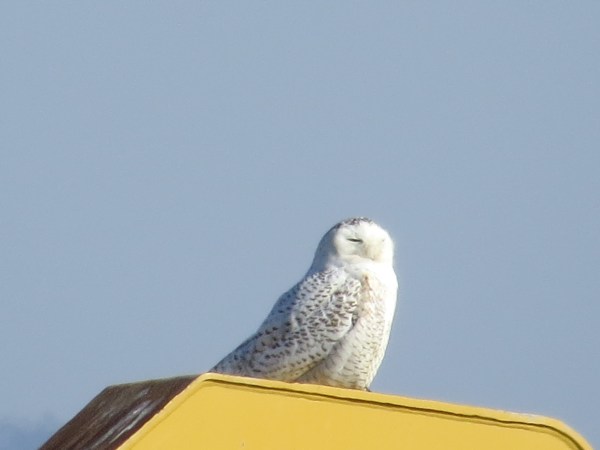
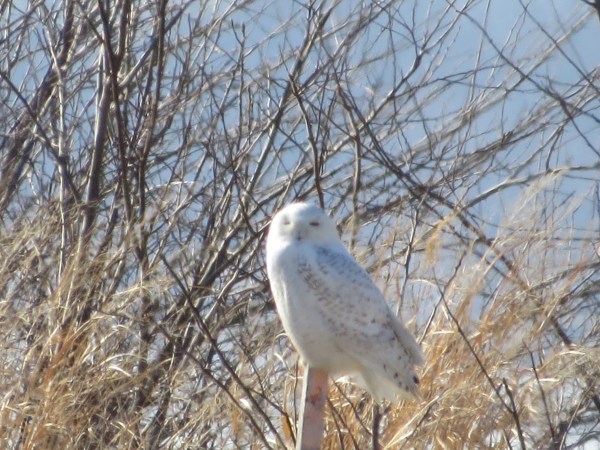
rare visitors from the north

Snowy Owl at Hart-Miller Island, Baltimore County, Maryland, USA. © 2018 S. D. Stewart

Snowy Owl #1 at Hart-Miller Island, Baltimore County, Maryland, USA. © 2018 S. D. Stewart


Snowy Owl at Hart-Miller Island, Baltimore County, Maryland, USA. © 2018 S. D. Stewart

Snowy Owl #2 at Hart-Miller Island, Baltimore County, Maryland, USA. © 2018 S. D. Stewart

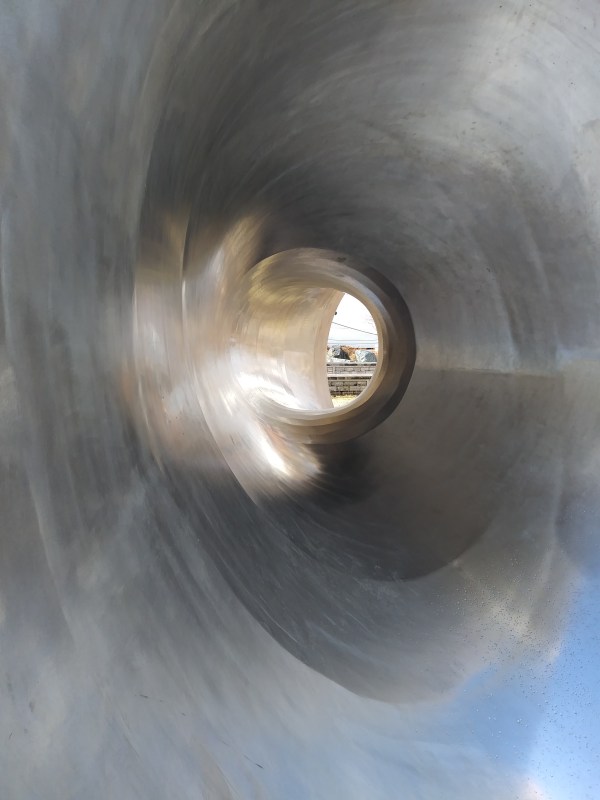
possible wormhole

emma ruth rundle ‘medusa’

‘the traces of our dreams’

If we cannot see the traces of our dreams it is because we tend to look for them by day or with a lamp. At night, when we glide through black absence, their phosphorescence betrays them.

Edmond Jabès, The Book of Questions: Volume I

2017 in books and music

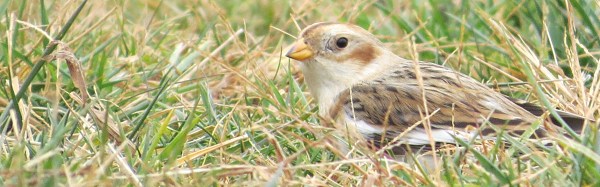
Snow Bunting at North Point State Park, Maryland, USA. © 2016 S. D. Stewart

Snow Bunting at North Point State Park, Maryland, USA. © 2016 S. D. Stewart

Following surgery to repair a pelvic fracture in January I was unable to put weight on my left leg for three months. One might think this would have resulted in a higher read count than usual for the year, but in fact my total fell short of my average over the past few years. Part of this was actually due to a concerted effort to slow down and read more leisurely. However, another reason was that once I was fully mobile I simply did not want to sit around reading, so I ended up reading much less in the second half of the year, though toward the end as bird migration tapered off and the weather grew colder my pace did pick up again.

Below is the list of books I assigned 5-star ratings on Goodreads in 2017. A number of books I rated 4 stars probably deserve a place here, too, but I had to draw the line somewhere. In the 4-star category I will mention the two Julien Gracq novels I read as being particularly noteworthy (The Castle of Argol and The Opposing Shore). Regrettably I believe both of these are out of print in English translation. However, I’m happy to report that NYRB has just reissued Gracq’s moodily atmospheric novel A Balcony in the Forest, so there’s hope now for future republication of his singular work in English.

In general this year was a good one for reissues of some of my favorite buried writers. Mid-20th century British avant-garde women writers fared especially well in 2017. Much of Leonora Carrington’s writing finally came back into print as part of the centennial celebration of her birth year, including short fiction collections in both U.S. and British editions, as well as her harrowing memoir Down Below and her children’s book The Milk of Dreams. A biography by Joanna Moorhead also appeared in the spring.

A 50th anniversary edition of Anna Kavan’s novel Ice came out from Penguin in the U.S. this fall. As the 50th anniverary of Kavan’s death approaches there has been a small surge of interest around her work. For example, the journal Women: A Cultural Review devotes its entire current issue to exploring various themes in Kavan’s work. Hopefully this new scholarship will help prompt Peter Owen to finally reprint Kavan’s mysterious novel Eagles’ Nest and the kaleidoscopic short fiction collection  A Bright Green Field, both of which have inexplicably been languishing out of print for years. (For more on Anna Kavan visit the House of Sleep).

Finally, the brief but bright shooting star of Ann Quin’s literary career received a much-deserved coda when the subscription-based UK publisher And Other Stories released a collection of her unpublished stories and fragments, which includes the powerful (though incomplete) manuscript The Unmapped Country. This fragment had previously appeared in shorter form in the long out-of-print Beyond the Words anthology. (Note that non-subscribers will need to wait until mid-January 2018 for the official publication of this volume). While the publication of this book is a boon for Quin fans, it’s probably not the best place to start with her writing. In fact, her four published novels are all quite different, so it’s tough to suggest a starting point with Quin. On an initial recommendation, I began with Tripticks and actually did not care for it but still sensed there was something drawing me to Quin. I found that in Passages, which I consider to be her masterwork. Three comes in second place, followed by her debut, Berg. Thankfully, all of Quin’s novels remain in print courtesy of Dalkey Archive Press, bless their dedicated hearts.

I will just mention one other reissue of note, tangential to Ann Quin. In April, the micro press Verbivoracious Press (VP)* published the first volume of an omnibus edition of Alan Burns’ novels. Burns was part of a loosely connected band of British avant-garde writers in the 1960s that included Ann Quin, as well as B.S. Johnson, Eva Figes, Rayner Heppenstall, and others. His novel Europe After the Rain draws interesting parallels to Kavan’s Ice and the relationship between the two novels is investigated in an article by Leigh Wilson in the previously mentioned issue of Women: A Cultural Review. In the past, VP, which specializes in reprinting ‘exploratory literature from Europe and beyond,’ also reissued a volume collecting two of Heppenstall’s novels (review), and many other experimental gems, including much of Christine Brooke-Rose‘s output.

*Unfortunately VP has closed its doors since this post appeared, so I have removed any relevant links.
This novel was reprinted in 2019 by Calder.

2017 5-star books (in order read):

Being Upright: Zen Meditation and the Bodhisattva Precepts / Reb Anderson
The Passion of New Eve / Angela Carter (Review)
The Poor Mouth / Flann O’Brien (Review)
The Plains / Gerald Murnane (Review)
The Complete Stories of Leonora Carrington (Review)
When the Time Comes / Maurice Blanchot (Review)
Snow Part / Paul Celan (Review)
S.S. Proleterka / Fleur Jaeggy (Review)
The Way of Chuang Tzu / Thomas Merton (Review)
The Rings of Saturn / W. G. Sebald (Review)
Alejandra Pizarnik: A Profile / Alejandra Pizarnik (Review)
Old Rendering Plant / Wolfgang Hilbig (Review)

If you’re a Goodreads user, my full list of books read in 2017 can be found here.

2017 soundtrack:

Barn Owl (and solo work by Jon Porras and Evan Caminiti)
Belgrado
Drab Majesty
Emma Ruth Rundle
Gate
Goat
Grails
Grouper
ISIS
Keluar
Kodiak
Marriages
Nadja
Neurosis
Portion Control
Scorn
Tim Hecker
Yellow Swans
…and too much post-punk to list (mostly by way of this finding aid)

  • Recent Posts

  • Navigation Station

    The links along the top of the page are rudimentary attempts at trail markers. Otherwise, see below for more search and browse options.

  • In Search of Lost Time

  • Personal Taxonomy

  • Common Ground

  • Resources

  • BOOKS BOOKS BOOKS