interview with ansgar allen

My interview with Ansgar Allen has been published at Heavy Feather Review.

2024 in reading

While in general 2024 was hit-or-miss (with the unspeakable horror of November 5th as the most egregious example of a miss), I am pleased to report that it was at least a fine reading year. Looking back on previous end-of-year book posts, it seems that I was past due for a good year, and so I am grateful for this one. Although the jaded reader inside me still finds it less likely each year to discover new writers I’ve not previously read who bowl me over, this year yielded an iota of hope. I came across not just one, but two writers new to me who stimulated and challenged my reading mind, while also reinvigorating my interest in the novel as a form capable of further manipulation, however slight.

These two contemporary British writers, Thomas Kendall and Ansgar Allen, captured my attention in a way that I have sorely missed. As such, during 2024 I read both of Kendall’s novels and much of Allen’s fiction corpus to date. Although I connected on a more emotional level with Kendall’s debut novel The Autodidacts, which was my favorite book of 2024, it is his second novel, How I Killed the Universal Man, that is more exciting in terms of literary achievement, for it envisions a possible very near future for humanity with all the attendant ramifications therein, all laid out in a way that does not cater to reader comprehension. It feels prophetic in the most frightening (and depressing) ways.

Similarly, Ansgar Allen’s fiction does not waste time courting the reader. Over the past five years, Allen has been quietly yet fiercely challenging the status quo of literature with his disruptive approaches to the act of writing. His work is not easy to categorize, which I believe is his intent. I was so intrigued by Allen’s work that I reached out to him for an interview, which will be published in February 2025 at Heavy Feather Review. In the interview, we discuss his work, the acts of writing and reading, the future of ‘the book’, and how sound can affect writing, among other topics. I also reviewed Allen’s latest novel The Faces of Pluto, and that review will be published at HFR in January 2025. I will add a link to it in this post once it has been published.

Since I focused a good amount of my reading energy this year on reading multiple books by individual authors, some of the books in the list are grouped by author. As usual, unless indicated otherwise, the links are to my Goodreads reviews.

Authors new to me

Thomas Kendall

The Autodidacts

How I Killed the Universal Man

Ansgar Allen

The Faces of Pluto (link to HFR review to be added)

The Wake and the Manuscript

Jesse Ball

Ball is a writer who has been on my radar for a few years, and I am very glad to have finally read some of his work. The two novels that I list here were my favorites of the four that I read. However, I am sufficiently interested that I will likely read more of his work.

The Repeat Room (review written on the day after the 2024 U.S. election)

A Cure for Suicide (no review written)

Maryse Meijer

Meijer was yet another writer who I had heard good things about, but I hadn’t read anything by her before this year. On the basis of my response to her first short story collection (Heartbreaker), I ended up reading her second collection of stories (review) and her novel The Seventh Mansion (no review).

Drain Songs: Stories and a Novella by Grant Maierhofer

Maierhofer is another writer whose name I regularly see mentioned in various literary haunts, but I hadn’t gotten to his work (apparently this was the year for trying to catch up on my to-read list). I had mixed reactions to some of the stories in this collection, but a couple of them and the title novella were excellent. The ‘review’ is just some minimal notes.

The Stories of Breece D’J Pancake by Breece D’J Pancake

This book languished on my to-read list for a decade before I finally got to it this year. It is a fantastic collection, and I think D’J Pancake could probably have eclipsed Raymond Carver if he’d lived longer than his brief 26 years.

Depressive Realism: Interdisciplinary Perspectives by Colin Feltham

This is a nonfiction book published by an academic press, but the ebook can be found at the Internet Archive. Despite its origins in academia, I think it is accessible to general readers, and I found it replete with compelling arguments.

Undercurrents by Marie Darrieussecq

Sometimes vagueness in writing can be hauntingly beautiful.

The Spectacle at the Tower by Gert Hofmann

One of those special books that masterfully maintains a sense of dread throughout, which I’m always seeking and rarely finding. For comparison, Paul Bowles comes to mind.

Mockingbird by Walter Tevis

A very fine dystopian novel from 1980.

Erasure by Percival Everett

This is deeply effective satire and very much on point. I read the book before watching the film adaptation (American Fiction), which is also good but unsurprisingly not quite as nuanced.

A Month in the Country by J. L. Carr

Carr’s atmospheric novel had been on my to-read list for nearly 10 years. It was very good, but I didn’t write a review. It seems at first to be a relatively simple story, but as the pathos builds it grows more complex.

Previously read writers

James Purdy

I read Narrow Rooms as a follow-up to In a Shallow Grave, which was a highlight of last year, and in the review of which I boldly claimed I would now read everything Purdy wrote. However, having since been underwhelmed by two of his other novels—Mourners Below (review) and The Nephew (review)—I am now skeptical of the veracity of that claim.

Philip K. Dick

I feel certain that in my lifetime I will complete my reading of all of PKD’s published work, but I am in no hurry. These three were all very good additions to the list of those I’ve read to date.

VALIS

Lies, Inc.

Do Androids Dream of Electric Sheep?

Gary J. Shipley

Shipley is an acquired taste and not for the squeamish. But he is one of the few writers in whose use of explicit horror I can discern a purpose apart from purely shock value. For that reason, I will continue to read his work, despite not always having the stomach for it.

So Beautiful and Elastic

The Unyielding

Crypt(o)spasm

Other noteworthy books by previously read writers

Burning Your Boats: The Collected Short Stories by Angela Carter

The Complete Short Stories: Volume 2 by J.G. Ballard

Alice Knott by Blake Butler

Rusticles by Rebecca Gransden

Dark Property: An Affliction by Brian Evenson (no review)

Mice 1961 by Stacey Levine: I neglected to include this in my original post because I technically read it in 2023, though it wasn’t published until 2024. I would be remiss in not mentioning it, though, as it was among the most unique novels I’ve read in recent years. The arrival of a new book by Stacey Levine is no small thing, and the long wait for this one was worthwhile. A polyphonic novel entwining sisterhood with the uncertain paranoia of the early Cold War, Mice 1961 takes place in small-town Florida, primarily during the course of a rollicking community house party. Certain novels offer the reader with an immersive experience, where one truly feels as if they have entered the book as an observer. This is one of those rare novels.

A few other notes: This year I finally finished reading Infinite Jest, which I had been reading on and off for the past two years or so (I liked Don Gately and the addiction recovery storyline best, but overall I preferred The Pale King, despite its unfinished status); I also finished the Gormenghast trilogy; I read two more of Clarice Lispector’s novels (The Hour of the Star and The Besieged City) and continue to be boggled by the inscrutability of her fiction; and I read Michel Houellebecq for the first time after years of reading reviews of his novels (I chose Serotonin and had mixed feelings).

2023 in reading

This year was another fairly abysmal one for reading, certainly among my least fruitful since I began compiling end-of-year lists. It was very similar to last year, marked by nearly identical problems of concentration and a frustrating lack of the immersive quality that typically makes reading so alluring. Thankfully, there were a few exceptions, and I suppose I need to think more deeply about what made those books exceptional in hopes of locating more titles that share those qualities. So, without further ado, here is the list of standouts in chronological order of date read with links to whatever I managed to write about the book on Goodreads (which in a few cases is very little). As with last year’s list, I rated all of these books either 4 or 5 stars on Goodreads and tagged them with my ‘somewhere else’ tag, which denotes a book that has truly taken me somewhere else.

Suicide by Édouard Levé

Rusty Brown by Chris Ware

In a Shallow Grave by James Purdy

Reincarnation by Kim Deitch

The Boat in the Evening by Tarjei Vesaas

The Physiognomy by Jeffrey Ford

O Caledonia by Elspeth Barker

Silk Flowers by Meghan Lamb

They by Kay Dick

Childhood/Youth/Dependency (The Copenhagen Trilogy, #1-3) by Tove Ditlevsen

Hangsaman by Shirley Jackson

Lanark by Alasdair Gray

The Plotinus by Rikki Ducornet

O the Chimneys: Selected Poems, Including the Verse Play, Eli by Nelly Sachs

2022 in reading

As I find myself at the end of the year thinking back on what I read in 2022, sadly only a few books spring immediately to mind. For some time now I have felt a growing distance between me—the reader—and the book in hand. I am still not sure why. I’ve been reading fewer books per year, which might suggest that I am reading slower and absorbing more. However, that has not proven to be the case. When comparing this reading year to last year, I see a similar pattern: a smattering of new discoveries bolstered by the works of long-time favorite writers. Reading these latter writers is always a bittersweet experience, as many of them are dead and I have either read all or most of their works by now. So it is with a somewhat heavy heart that I find myself reading the final few titles of writers such as Thomas Bernhard, of whom this year I closed out my reading of all his available prose translated into English. Although rereading books is a practice I rarely engage in, I find myself more drawn to the idea as I reflect on whether it would be more rewarding to rediscover and/or find new layers of appreciation in books I’ve already read than to continue casting about for new gems that I never seem able to unearth. It may soon be that I stop seeking the new altogether and retreat to my reading cave with a stack of favorites. But for now, here are my top reads for this year, in chronological order, with a few notes and links to my reviews. All books were either rated 4 or 5 stars on Goodreads and tagged with my ‘somewhere else’ tag, which denotes a book that has truly taken me somewhere else.

Swallowing Mercury by Wioletta Greg: I have a special fondness for Polish literature—I wouldn’t say I’ve read a lot of Polish writers, but all the ones I have read stand out in my mind, head and shoulders above many other writers. Unfortunately, Greg’s linked follow-up to this semi-autobiographical coming-of-age novel did not measure up to the poetic magic found in these pages.

The Orchid Stories by Kenward Elmslie: One of the strangest books I’ve ever read. I can’t say the experience was consistently enjoyable, per se, but it certainly was worthwhile.

The Death of Conrad Unger by Gary J. Shipley: As you can see, I didn’t actually write anything about this book, only pulled a few quotes that struck me. Discovering Shipley’s writing was a reading highlight this year, though as with the fiction of writers such as Maurice Blanchot, I sometimes find it hard to write about it. But Shipley’s unique style of philosophical horror fiction is an important strand of literature needling its way forward into the future of our doomed planet.

Terminal Park by Gary J. Shipley: Relevant reading for dark times.

Failure to Thrive by Meghan Lamb: Meghan Lamb continues to impress me and remains one of the most interesting younger American writers I’ve come across. So much of the contemporary American literary fiction landscape is dominated by craft-oriented writers whose fiction leaves me cold. Lamb is one of the few I’ve discovered who is clearly dedicated to her craft yet still writes compelling stories with real emotion woven into them.

Frances Johnson by Stacey Levine: I’d read Levine’s novel Dra– a few years ago and really enjoyed it but hadn’t gotten to any of her other books until this year. I liked this darkly whimsical tale of a woman approaching middle age so much that I also read Levine’s two story collections this year.

The Lighted Burrow by Max Blecher: Blecher’s novel Adventures in Immediate Irreality is a favorite of mine, and so I was thrilled to see that Sublunary Editions was publishing this one in English translation by the talented writer-translator Christina Tudor-Sideri. While not as irreal as Adventures, this is still a powerful book of autofiction drawn from Blecher’s time in sanatoriums across Europe.

Scarred Hearts by Max Blecher: Craving more Blecher after consuming The Lighted Burrow, I turned to his only other work of fiction, which offers a much more straightforward story than his other books. Still centered on illness and convalescence, this one is a little more distanced in the telling, in part due to the third-person viewpoint. All of Blecher’s work is essential in my view, though. I’ve only sampled his poetry but expect to delve into it at a deeper level soon.

The Edge of the Object by Daniel Williams: I’ve been reading and enjoying Daniel Williams’s writing (mostly) online for a long time so was happy to find that his debut novel was being published. The craftsmanship that went into the production of this book is as much on display as Williams’s deftness with the English language. Truly a one-of-a-kind book.

Beyond the Curve by Kōbō Abe: This is a ‘best of’ type collection of Abe’s short fiction and while not every story is a knockout, many of them are very good. I find Abe to be consistently interesting and his recurring themes of alienation, isolation, social ineptitude, anxiety, and paranoia always resonate with me.

New and Selected Stories by Cristina Rivera Garza: I read this one in a group discussion forum on Goodreads. Rivera Garza is always thought-provoking, though overall I think I prefer her novels to her short stories. The stories that held the most appeal for me in this collection were those that shared common thematic and stylistic ground with her two excellent novels The Iliac Crest and The Taiga Syndrome.

The Dark Bough by Henri Bosco: Bosco’s masterpiece Malicroix was a favorite of mine from 2020, and ever since then I’d been wringing my hands over whether to spring for a copy of this other novel of his. Malicroix had been a NYRB reissue, but this one was very old and out of print. Probably by most actual book collectors’ standards the prices for this online were not much to fret over, but I don’t buy a lot of books in general (diehard library user here), and rarely do I spend over US$20 for a book. However, after exhausting all efforts to find this through interlibrary loan I finally gave in and sprang for a used copy. Though the novel is not at the same level as Malicroix, it was still well worth the money spent. I hope that NYRB or another publisher decides to reissue this one, too.

Thomas Bernhard: 3 Days: Three days of Thomas Bernhard sitting on a park bench and talking about himself and other matters—what’s not to love? Pair this with Bernhard’s memoir Gathering Evidence and you will receive as comprehensive an image of Bernhard the person as he was willing to make public.

Prose by Thomas Bernhard: Bernhard is much more well-known for his novels than for his short stories, so I was a little wary approaching this one, but it ended up being very good and in a slightly different way than his novels, which was a pleasant surprise.

The Anniversary of Never by Joel Lane: Lane is a favorite ‘weird fiction’ writer of mine and this collection of his was recently reissued. His fictive milieu is not to be rivaled in its unique flavor: a dark gloomy West Midlands landscape peopled by lost souls struggling to connect.

Watchmen by Alan Moore: Yeah, I finally read it and it was good. Pretty much rendered any subsequent superhero comics irrelevant.

Three Novellas by Thomas Bernhard: Clearly I became gluttonous in my reading of Bernhard again, but it was worth it—his writing was a tangible flotation device to cling to when I felt like I was sinking.

Under the Sign of the Labyrinth by Christina Tudor-Sideri: This was the first of Tudor-Sideri’s two books that I read this year. She is a challenging writer to read—restless and relentlessly questioning in her prose, often retreating to ambiguity—but always rewarding.

Disembodied by Christina Tudor-Sideri: Tudor-Sideri’s first novel is a single paragraph of digressive and fragmented prose, delivered by a narrator in her final breath.

Chasm by Dorothea Tanning: The only novel by Surrealist artist and writer Dorothea Tanning. A rare single-day read for me that checked a lot of my personal reading boxes.

The Voice Imitator by Thomas Bernhard: I’d been avoiding this book for years because I couldn’t imagine Bernhard’s writing in such microscopic form, but I ended up really enjoying these early little fictions of his.

Private Property by Mary Ruefle: It had been quite a while since I’d read Mary Ruefle, but she’s always been a favorite of mine so I knew I’d get back to her sooner or later. This one is up there close to her best work in the form where I think she excels the most—short prose pieces that range from the poetic to the essayistic.

On the Mountain: Rescue Attempt, Nonsense by Thomas Bernhard: This was Bernhard’s earliest known prose work and the one he chose to have published last in his lifetime. It’s possible that only the most dedicated Bernhard readers would enjoy this, for it is very much an embryonic work for such a storied writer, but I found it to be fascinating and a fitting close to my reading of his prose works. (What now? Perhaps I will begin staging his plays as solo shows in my house…)

Play It as It Lays by Joan Didion: Finally got around to reading some Didion and it didn’t disappoint. This falls in line with other novels I’ve read from the same era by women writers such as Ann Quin, Renata Adler, and, to a lesser extent, Joy Williams. But Didion’s style is distilled to such a purity of focus that it perhaps encapsulates that particular zeitgeist of the late 1960s/early 1970s best of all.

The Shutter of Snow by Emily Holmes Coleman: This novel based on Coleman’s own experience in a psychiatric hospital delivers a pitch-perfect blend of horror, outrage, pathos, and absurdity. To be filed alongside Ann Quin’s The Unmapped Country, Anna Kavan’s Asylum Piece, and Leonora Carrington’s Down Below as another exemplar of literature exposing the cruelty, hypocrisy, and inhumanity inherent in the forced institutionalization of women, in particular.

2021 in reading

Better late than never with this, I guess. 2021 was even more of a chronological smear than 2020. When I look back at everything that went down—both in my personal life and in the world at large—I can’t comprehend how all of it happened in a mere 365 days, especially when the last few years leading up to this one seem in retrospect to have been so (relatively) uneventful (uh…no, scratch that…and hindsight in general). At times I felt like I was living in a horrorscape this year—partly of my own making and partly sculpted by forces outside my control. The second half of the year was much worse than the first, and now that it’s over I feel depleted. Normally I’d bury my head in the sand and try to read my way through these brutal periods, but that wasn’t working this year. I ended up reading just barely over half of my total for 2020. At a certain point I gave up on writing reviews for the most part, as well—there was simply no time for writing. Unfortunately this lead to a further feeling of disconnection from what I had read.

In looking at what I did manage to read, unsurprisingly I see a lot of aimless casting about for distraction. I ricocheted from new-to-me writers (for example, trying to find my footing with Marie NDiaye; finally reading Stoner after first shelving it seven years ago [not worth the long wait]; diving headfirst into Blake Butler’s work with Scorch Atlas, the experience of which by contrast actually made the last couple of years seem festive) to unread titles by old favorites (Marguerite Duras, Alain Robbe-Grillet, Denton Welch, Joy Williams). In between—when pages of prose alone felt too weighty—I gorged on a passel of graphic novels (highlights: Chris Reynolds’ The New World: Comics from Mauretania, Charles Burns’ Last Look trilogy, and several books by Martin Vaughn-James).

A few other stand-outs:

Best book out of left field: Negative Space by B. R. Yeager
Best book I wish I’d read a long time ago: The Driver’s Seat by Muriel Spark (read in omnibus edition)
Best book to suit my mood at the time I read it: The Moment by Peter Holm Jensen
Best book that is also a great movie: Valerie and Her Week of Wonders by Vítězslav Nezval

The most important reading lesson I (re)learned this year is that I can’t ignore the need to read for comfort. This year was a reminder that reading is not always about expanding my thinking, broadening my view of the world, or whatever other pseudo-lofty b.s. qualities I might in my weaker moments ascribe to it. Sometimes I need to experience the pleasure of reading solely for its own sake—unfortunately my ability (and willingness) to do that has declined in recent years. When I look back over what I read in 2021, I realize that I took the most comfort in reading Joy Williams and Denton Welch—two very different writers, but both masters of their craft whose skill at fitting words together facilitates a transcendent experience for me. In general I want more of that.

Looking ahead to 2022…I have no concrete reading goals, but I think I will probably read less and hopefully enjoy more of the books I’m able to finish. Writing more reviews again would also be nice.

Happy New Year!

2020 in books and music

The less said about this year the better (at the moment and in this space, at least).

My current total of books read for the year stands at 136 and I’m sure I’ll finish a few more before year’s end, though they probably won’t make this list, so I’m posting it earlier than usual. I will update later if this changes. As it turns out I read more books last year, but I suspect I spent more actual hours reading this year due to the circumstances. I think I read more longer books this year, which probably accounts for the difference. Once Goodreads provides my year-end stats I can compare number of pages read and see if this is the case (Update: turns out my suspicions were off the markso far I’ve read about 10,000 less pages this year than my total for last year. Definitely not going to make up that difference in the next couple of weeks).

Concentration was definitely a problem this year. As a result I found myself switching between books, starting and stopping books, and completely abandoning books more than usual. But reading remained my top leisure activity and provided a safe refuge from the chaos and negative energy in the world.

If you’re a Goodreads user you can view my entire list of books read here.

Top reads (in order within each genre by date read):

Note: in most cases links are to my Goodreads reviews, not all of which are actual reviews)

Novels/Novellas:

The Box Man / Kōbō Abe (review)
Wide Sargasso Sea / Jean Rhys (review)
The Atrocity Exhibition / J. G. Ballard (review)
The Doll / Lukas Tomin (review)
Dézafi / Frankétienne (review)
The Golden Cut / Merl Fluin (review)
The Diary of Mr. Pinke / Ewald Murrer (review)
Mount Analogue / René Daumal (review)
Rogomelec / Leonor Fini (review)
Mangled Hands / Johnny Stanton (review)
The Model / Robert Aickman (review)
The Narrator / Michael Cisco (review)
The Undying Present / Syd Staiti (review)
The Warren / Brian Evenson (review)
Yesterday / Ágota Kristóf (review)
Such Small Hands / Andrés Barba (review)
The Bridges / Tarjei Vesaas (review)
Malicroix / Henri Bosco (review)
The Left Hand of Darkness / Ursula K. Le Guin

Short Stories:

All of Your Most Private Places / Meghan Lamb (review)
Secret Hours / Michael Cisco (review)
The Sleep of the Righteous / Wolfgang Hilbig (review)
Waystations of the Deep Night / Marcel Brion (review)
Unreasonable Hours / Julio Cortázar (review)
The Delicate Prey and Other Stories / Paul Bowles (review)
Morbid Tales / Quentin S. Crisp (review)
The Doll Maker and Other Tales of the Uncanny / Sarban (review)
The Sea-Rabbit; Or, the Artist of Life / Wendy Walker (review)
The Unsettled Dust / Robert Aickman (review)
The Earth Wire / Joel Lane (review)

Poetry:

Autumn Sonata: Selected Poems / Georg Trakl (review)
A Certain Plume / Henri Michaux (review)
Coma Crossing: Collected Poems / Roger Gilbert-Lecomte (review)
The Last Gold of Expired Stars: Complete Poems 1908–1914 / Georg Trakl (review)

Drama:

Complete Plays / Sarah Kane (review)

Cross-Genre:

The House of Illnesses / Unica Zürn (review)
Nights as Day, Days as Night / Michel Leiris (review)
The Star Opens Slowly / Casi Cline (review)
Desire for a Beginning Dread of One Single End / Edmond Jabès (review)
Wasteland / New Juche (review)

Literary Anthologies:

Man in the Black Coat: Russia’s Literature of the Absurd / Oberiuty (review)

Nonfiction:

The Trouble With Being Born / E. M. Cioran (review)
Mutations: The Many Strange Faces of Hardcore Punk / Sam McPheeters (review)

Comix:

The Portable Frank / Jim Woodring (review)
Nijigahara Holograph / Inio Asano
Gast / Carol Swain (review)
My Favorite Thing Is Monsters: Vol. 1 / Emil Ferris (review)

________________________________________________________________

MUSIC

I listened to a lot of mixes this year, as opposed to full albums, so I’m keeping the list short, tailored mostly to bands whose songs I keep replaying. I will note that not much has changed with my favorites over the past few years. Occasionally a new band gets added to the heavy rotation roster, but it’s often within an existing favored genre. Nearly everything Justin Broadrick touches continues to floor me. The drone doom and wider post-metal genres in general are popular zones, supplemented with frequent forays into ambient, post-punk, industrial, and retro trips to hardcore, punk, and 80s alternative rock. Much like with my reading tastes, a solidification seems to have occurred. I blame middle age.

The (very) abridged list of what got me through 2020, in no particular order (links in most cases direct to artist Bandcamp pages):

True Widow
Emma Ruth Rundle
Helms Alee
Thou
Jesu
Final
Transitional
Scorn
Nadja
Pelican
Seefeel
Dead Can Dance

2017 in books and music

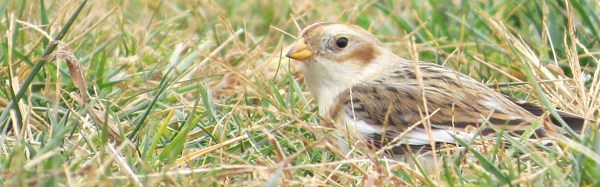
Snow Bunting at North Point State Park, Maryland, USA. © 2016 S. D. Stewart

Snow Bunting at North Point State Park, Maryland, USA. © 2016 S. D. Stewart

Following surgery to repair a pelvic fracture in January I was unable to put weight on my left leg for three months. One might think this would have resulted in a higher read count than usual for the year, but in fact my total fell short of my average over the past few years. Part of this was actually due to a concerted effort to slow down and read more leisurely. However, another reason was that once I was fully mobile I simply did not want to sit around reading, so I ended up reading much less in the second half of the year, though toward the end as bird migration tapered off and the weather grew colder my pace did pick up again.

Below is the list of books I assigned 5-star ratings on Goodreads in 2017. A number of books I rated 4 stars probably deserve a place here, too, but I had to draw the line somewhere. In the 4-star category I will mention the two Julien Gracq novels I read as being particularly noteworthy (The Castle of Argol and The Opposing Shore). Regrettably I believe both of these are out of print in English translation. However, I’m happy to report that NYRB has just reissued Gracq’s moodily atmospheric novel A Balcony in the Forest, so there’s hope now for future republication of his singular work in English.

In general this year was a good one for reissues of some of my favorite buried writers. Mid-20th century British avant-garde women writers fared especially well in 2017. Much of Leonora Carrington’s writing finally came back into print as part of the centennial celebration of her birth year, including short fiction collections in both U.S. and British editions, as well as her harrowing memoir Down Below and her children’s book The Milk of Dreams. A biography by Joanna Moorhead also appeared in the spring.

A 50th anniversary edition of Anna Kavan’s novel Ice came out from Penguin in the U.S. this fall. As the 50th anniverary of Kavan’s death approaches there has been a small surge of interest around her work. For example, the journal Women: A Cultural Review devotes its entire current issue to exploring various themes in Kavan’s work. Hopefully this new scholarship will help prompt Peter Owen to finally reprint Kavan’s mysterious novel Eagles’ Nest and the kaleidoscopic short fiction collection  A Bright Green Field, both of which have inexplicably been languishing out of print for years. (For more on Anna Kavan visit the House of Sleep).

Finally, the brief but bright shooting star of Ann Quin’s literary career received a much-deserved coda when the subscription-based UK publisher And Other Stories released a collection of her unpublished stories and fragments, which includes the powerful (though incomplete) manuscript The Unmapped Country. This fragment had previously appeared in shorter form in the long out-of-print Beyond the Words anthology. (Note that non-subscribers will need to wait until mid-January 2018 for the official publication of this volume). While the publication of this book is a boon for Quin fans, it’s probably not the best place to start with her writing. In fact, her four published novels are all quite different, so it’s tough to suggest a starting point with Quin. On an initial recommendation, I began with Tripticks and actually did not care for it but still sensed there was something drawing me to Quin. I found that in Passages, which I consider to be her masterwork. Three comes in second place, followed by her debut, Berg. Thankfully, all of Quin’s novels remain in print courtesy of Dalkey Archive Press, bless their dedicated hearts.

I will just mention one other reissue of note, tangential to Ann Quin. In April, the micro press Verbivoracious Press (VP)* published the first volume of an omnibus edition of Alan Burns’ novels. Burns was part of a loosely connected band of British avant-garde writers in the 1960s that included Ann Quin, as well as B.S. Johnson, Eva Figes, Rayner Heppenstall, and others. His novel Europe After the Rain draws interesting parallels to Kavan’s Ice and the relationship between the two novels is investigated in an article by Leigh Wilson in the previously mentioned issue of Women: A Cultural Review. In the past, VP, which specializes in reprinting ‘exploratory literature from Europe and beyond,’ also reissued a volume collecting two of Heppenstall’s novels (review), and many other experimental gems, including much of Christine Brooke-Rose‘s output.

*Unfortunately VP has closed its doors since this post appeared, so I have removed any relevant links.
This novel was reprinted in 2019 by Calder.

2017 5-star books (in order read):

Being Upright: Zen Meditation and the Bodhisattva Precepts / Reb Anderson
The Passion of New Eve / Angela Carter (Review)
The Poor Mouth / Flann O’Brien (Review)
The Plains / Gerald Murnane (Review)
The Complete Stories of Leonora Carrington (Review)
When the Time Comes / Maurice Blanchot (Review)
Snow Part / Paul Celan (Review)
S.S. Proleterka / Fleur Jaeggy (Review)
The Way of Chuang Tzu / Thomas Merton (Review)
The Rings of Saturn / W. G. Sebald (Review)
Alejandra Pizarnik: A Profile / Alejandra Pizarnik (Review)
Old Rendering Plant / Wolfgang Hilbig (Review)

If you’re a Goodreads user, my full list of books read in 2017 can be found here.

2017 soundtrack:

Barn Owl (and solo work by Jon Porras and Evan Caminiti)
Belgrado
Drab Majesty
Emma Ruth Rundle
Gate
Goat
Grails
Grouper
ISIS
Keluar
Kodiak
Marriages
Nadja
Neurosis
Portion Control
Scorn
Tim Hecker
Yellow Swans
…and too much post-punk to list (mostly by way of this finding aid)

‘the source we have forgotten’

The road. When I could drive no more for weariness I huddled in the back of the car and uneasily dreamed for a few hours but I did not do that often, I was in a frenzy that precluded rest. I felt that I was in a great hurry but I did not know I was speeding toward the very enigma I had left behind–the dark room, the mirror, the woman. I did not know this destination exercised a magnetic attraction on me. I did not know I could not stop.

In the mornings, the ground was white with hoar frost for it was now late October and a crimson sun rose over plains that rolled as far as the pale hem of the sky. There were no trees. The radio in the car fed me an aural pabulum of cheapjack heartbreak; this nasal country music was interspersed with voices that sang the praises of innumerable articles of consumption and sputtered out frequent news bulletins. The Harlem Wall grew longer, taller, thicker; the National Guard was on permanent call. Riots, incendiarism. I could not have picked a worse time for my trip. Only fatality could have possessed me to go high-tailing off in such troubled times, fatality and the unknowable impulsion of the destination ahead of me, a destination of which I was entirely ignorant although it had chosen me long ago for our destinations choose us, choose us before we are born.

And exercise a magnetic attraction upon us, drawing us inexorably toward the source we have forgotten. Descend lower, descend the diminishing spirals of being that restore us to our source. Descend lower; while the world, in time, goes forward and so presents us with the illusion of motion, though all our lives we move through curvilinear galleries of the brain towards the core of the labyrinth within us.

—Angela Carter, The Passion of New Eve

2016: my reading crisis year

This year I suffered a crisis of faith in reading fiction. It began early this summer and lasted for several months. At its deepest point I thought I might not ever read another novel. Its origins lay in a complex amalgamation of factors, including a long run of uninspiring reads, the completion of the final stages of a three-year writing project, and a profound deepening of my Zen Buddhist practice. The details of how these factors intersected are of a personal nature that I won’t explore here. Ultimately, however, I weathered this crisis and am pleased to report that I returned to fiction this autumn, albeit with a radically altered view of how I approach my reading and what I hope to extract from it. Perhaps I will write more about these changes in the future, but for now here are the highlights from my reading year, most of them from before the crisis hit. Most links are to my Goodreads reviews, but in cases where I didn’t write a review I’ve provided a publisher link when available.

I enjoyed spending more time with the British avant-gardists of the 1960s, including B.S. Johnson (Travelling People), Ann Quin (completing my reading of her slim output with Berg & Three), Alan Burns (Europe After the Rain & Dreamerika!), Rayner Heppenstall (The Greater Infortune / The Connecting Door), and those others included in the excellent anthology Beyond the Words.

The lost American Modernist Margery Latimer captured my attention, although after reading most of her published output, I found that We Are Incredible was the only work of hers to linger long with me.

Robert Coover’s The Origin of the Brunists was an expected winner in the spring. I look forward to moving on to the sequel The Brunist Day of Wrath, of which I’ve already read a tantalizing excerpt in Conjunctions (#60) a couple of years back.

At the end of the summer I confronted my crisis head-on and approached fiction again through the lens of some old favorites, namely Thomas Bernhard and Marguerite Duras. It was a bittersweet experience with Bernhard, as I was closing out his novels with his final opus, Extinction, and I had a mixed reaction, as I discuss in my review. With Duras, I discovered a new favorite of hers in Summer Rain, which regrettably appears to be out of print, though easy enough to find on the used market (or through interlibrary loan).

But it was Samuel Delany’s Dhalgren that truly immersed me in the wonders of fiction again. This one had been on my to-read list for several years, but its length led me to keep putting it off. I knew, though, that the frenetic pace of my reading had contributed to my crisis and I suspected that a long book might force me to slow down and allow proper digestion to take place. My hunch was correct, for Delany’s storytelling, while compelling and highly readable, demanded the downshift in pace that I so desperately needed to make. Review here.

Other favorites from the year:

Kassandra and the Wolf by Margarita Karapanou – defies description.

Tales of Galicia by Andrzej Stasiuk

The Weight of Things by Marianne Fritz – one of those books whose word count belies its depth. Plot materializes like a squid undulating in its own inky emissions.

The Quest for Christa T. by Christa Wolf – “The paths we really took are overlaid with paths we did not take. I can now hear words that we never spoke. Now I can see her as she was, Christa T., when no witnesses were present. Could it be possible? –The years that re-ascend are no longer the years they were. Light and shadow fall once more over our field of vision: but the field is ready. Should that not amaze us?” (p. 23)

My reading goal for 2017 is to maintain a more leisurely pace—no more gobbling down prose like a pig at the trough. I want to allow literature to seep into my consciousness and take root instead of finishing with restless haste before moving immediately onto the next book. I see more long books in my future, where there is space to lie down and rest awhile, where the last page doesn’t come too soon, leading me to veer off in yet another direction before first taking stock and reorienting myself.

‘he walked arm in arm with his shadow’ (éric chevillard)

aural darkness in june. a way to refuse the heat. alice. another merciful release. a spiral of silence. another five minutes in this chair. jabès with his name in his pain but his pain with no name. writing about the book and its hold over us. the power of the word. meanwhile duras is looking at the time. ‘it was ten o’clock. in the evening. it was summer.’ and what could maria call the time opening ahead of her…’this incandescence, this bursting of a love at last without object.’

been here too long. here early / leave late / write in boxes / move on wheels back uphill. two legs, four legs, crossing thresholds over and over. sidewalks of daily desolation. tedium in quin’s ‘city where every street declares its defeat.’ consider bernhard and his ‘born barricade fanatics’the shared ‘desire to barricade ourselves from the world.’

but then there is jabès in unwilling exile from his beloved desert. everyone in some form of exilemental, physical, spiritual—feeling incapable of return. like robin about whom the baron thinks ‘there was in her every movement a slight drag, as if the past were a web about her, as there is a web of time about a very old building.’ and yet nora saying ‘robin can go anywhere, do anything, because she forgets, and i nowhere because i remember.’ because what bliss it would be to forget, right, to not always be dragging that chain of keyless padlocks behind. two (mis?)interpretations of another’s experience. dangers of outside looking in. but what of robin. what of robin. on the floor barking like a dog. a shattered mirror. surrendered to expectations. a final transition to conditioned response. or the ultimate shedding of humanity’s heavy carapace.

  • Recent Posts

  • Navigation Station

    The links along the top of the page are rudimentary attempts at trail markers. Otherwise, see below for more search and browse options.

  • In Search of Lost Time

  • Personal Taxonomy

  • Common Ground

  • Resources

  • BOOKS BOOKS BOOKS