
ghost cats of Delverne
from their hilly perches stare
white sentries above
All posts in category writing
ghost cats of Delverne
Posted by sean on August 8, 2016
https://sd-stewart.com/2016/08/08/ghost-cats-of-delverne/
excerpt from alejandra pizarnik’s diary
Empty happiness. I spent the day reading poems. Trying to learn the technique, in a miserly and premeditated manner. Sometimes it makes me nostalgic to think of children, for whom every action is play. For me, to read poems is work, a great effort. To manage to focus my attention on other people’s words and feelings is a battle against myself. I made two poems. And yesterday another two. I think I won’t ever be able to make a novel, because I’ve nothing to tell in many pages, and even if I had something to tell, but no, I’ve nothing to tell.
Read more at Music & Literature (found via The Blog of Disquiet)
See also: Extracting the Stone of Madness, Pizarnik’s first full-length collection of poetry in English, which was just published this week by New Directions.
Posted by sean on May 20, 2016
https://sd-stewart.com/2016/05/20/excerpt-from-alejandra-pizarniks-diary/
when, if not now?
Dear sister, Christa T. wrote, in summer 1953. When, if not now?
You know how it is: the time passes quickly, but it passes us by. This breathlessness, or this inability to draw a deep breath. As if whole areas of the lungs have been out of action for an eternity. When that is so, can one go on living?
What presumption: to think one could haul oneself up out of the swamp by one’s own bootstraps. Believe me, one doesn’t change; one remains everlastingly out of it, unfit for life. Intelligent, yes. Too soft; all the fruitless ponderings; a scrupulous petite bourgeoise . . .
You’ll certainly remember what we used to say when one of us was feeling forlorn: When, if not now? When should one live, if not in the time that’s given to one? It always helped. But now—if only I could tell you how it is . . . The whole world like a wall facing me. I fumble over the stones: no gaps. Why should I go on deluding myself: there’s no gaps for me to live in. It’s my own fault. It’s me, I’m simply not determined enough. Yet how simple and natural everything seemed when I first read about it in the books.
I don’t know what I’m living for. Can you see what that means? I know what’s wrong with me, but it’s still me, and I can’t wrench it out of myself! Yet I can: I know one way to be rid of the whole business once and for all . . . I can’t stop thinking about it.
Coldness in everything. It comes from a long way off; it gets into everything. One must get out of the way before it reaches the core. If it does that, one won’t feel even the coldness any more. Do you see what I mean?
People, yes. I’m not a recluse. You know me. But I won’t let anything force me; there has got to be something that makes me want to be with them. And then I also have to be alone, or I’m miserable. I want to work. You know—with others, for others. But as far as I can see my only possible kind of activity is in writing; it’s not direct. I have to be able to grapple with things quietly, contemplating them . . . All of which makes no difference; the contradiction can’t be resolved—none of this makes any difference to my deep sense of concurring with these times of ours and of belonging to them.
But then the next blow—if only you knew how little it takes for anything to be a blow to me!—might fling me up on the beach. Then I won’t be able to find my way back on my own. I wouldn’t want to live among a lot of other stranded people; that’s the one thing I do know with any certainty. The other way is more honorable and more honest. And it shows more strength.
Anything rather than be a burden to the others, who’ll carry on, who are right, because they’re stronger, who can’t look back, because they haven’t got the time.
—Christa Wolf, The Quest for Christa T.
Posted by sean on May 5, 2016
https://sd-stewart.com/2016/05/05/when-if-not-now/
the one and the other discuss regret
Hello, one.
Hello, other.
One, I’d like to tell you a story.
O joy! I love stories.
You might not love this one.
Hmm. Okay. Well, tell away, other.
A few days ago I was out driving…
Wait! cried the one. You don’t know how to drive, other.
That’s not important.
The one looked doubtful.
Look, I’m telling this story, one. And in the story I was driving. See?
O. Yes, I see, other.
So I was out driving. There I am in this big hunk of metal moving at 70 miles per hour. It was absurd.
O! We like the absurd, other!
Usually, yes…yes, we do, one. But this was not funny absurd. It was scary absurd. I mean, at any moment another hunk of metal could have veered into my hunk of metal and then I might have died.
O, yes, you are right, other, that is scary absurd. I would not have liked for you to die.
And the signs, the electronic signs kept shrieking at me.
What were they saying, other?
Always the same phrase, one: Nothing Super About Jail Drive Sober.
O. That is strange, other.
Anyway, after the signs stopped shrieking at me the sun began bleeding orange and yellow streaks all across the sky amid big puffs of blue and grey. It was so beautiful, one. It almost made me forget I was inside a big hunk of metal. And then, and then I saw something even more wondrous.
What was it! cried the one.
It was an enormous flock of geese, one. Hundreds, maybe even thousands, off to the side of the road in a big field. Some were the all white ones–
O! You mean Snow Geese, other!
Yes, and some were the other kind. The brown and black dingy looking ones that are everywhere now.
Canada Geese! sang the one.
Yes, yes! cried the other, excited now. And they were all swirling around, making their calls. And some were on the ground, poking around in the fields. It was quite a spectacle, one.
I bet it was, other, I bet it was.
Except now I am sad.
O no! Why are you sad, other?
Well, I didn’t stop my hunk of metal to take in the whole scene. I could have turned around and pulled over and gazed upon this sight for the precise number of minutes necessary to fully absorb a wonder of nature such as this, one. Also there may have been some unusual or rare geese in the flock, but I didn’t take the time to look for them.
O. Hmm. Yes, I can see how that might make you feel sad, other.
It’s a strange sort of sadness, one. Do you know it?
Yes, I do, other. I believe they call this special type of sadness regret.
I do not like this regret feeling, one. How do I stop it? Can I maybe stuff something down inside me? Chocolate perhaps?
I’m not sure, other, the one said gravely. I think you have to wait and hope for it to fade away. Chocolate never hurts, of course, but I’m not sure it’s strong enough to fix this.
Well, how can I avoid it in the future then? I do not want this regret feeling ever again, one, never ever.
I’m not sure you can totally avoid it, other! But you can try to take every opportunity that comes to you, and that way at least you have tried.
O, will I then not feel sad? Even if I try to take the opportunity but don’t make it? Even if I…fail?
I can’t promise you won’t feel sad, other. But your sadness will likely feel different than regret. It will be mixed in with the satisfaction of knowing you tried. So that might make it feel not so bad.
O, thank you, one! I think this was very helpful. You are so wise!
I’m glad, other! I am always happy to help.
Goodbye, one!
Goodbye, other! Until next time.
______________________________
For more discussions between the one and the other, click here.
Posted by sean on February 8, 2016
https://sd-stewart.com/2016/02/08/the-one-and-the-other-discuss-regret/
field report: woodpecker redux
Recent intelligence gathering indicated the presence of a group of likely overwintering red-headed woodpeckers, including two adults, at another park in the area so I went to investigate. Again I found them immediately, as they were actively foraging and calling frequently. Their ‘rattle’ call is quite distinctive and often precedes a visual ID. Lighting was more favorable today, so here are a few photos accompanying a report on my findings.

Adult Red-headed Woodpecker strikes the classic woodpecker pose at Black Marsh, North Point State Park.

Adult Red-headed Woodpecker at Black Marsh, North Point State Park.
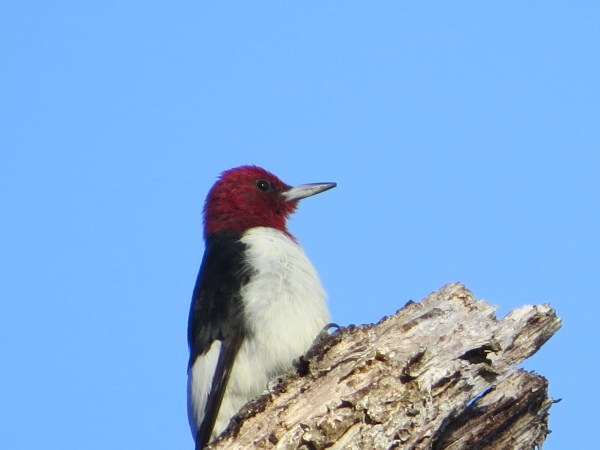
Adult Red-headed Woodpecker at Black Marsh, North Point State Park.

An immature Red-headed Woodpecker glares at the photographer, North Point State Park.
After spending way too much time attempting to photograph the woodpeckers I continued on from the Black Marsh Wildlands into the rest of the park. First I took the Powerhouse Trail.

Powerhouse Trail at North Point State Park.
Rising up out of the woods before me came the trail’s namesake…

Powerhouse at North Point State Park.
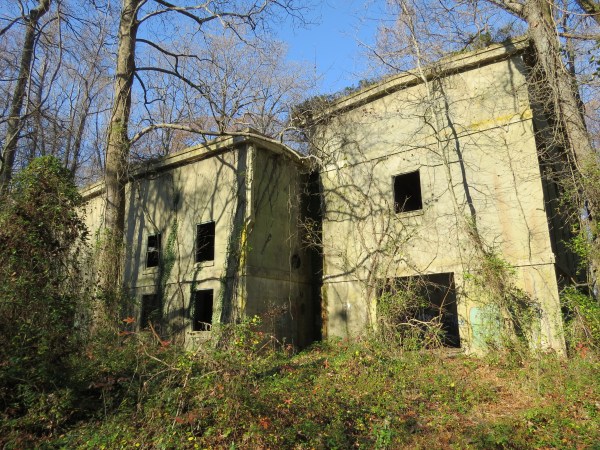
Powerhouse at North Point State Park.
The property that is now North Point State Park was formerly a local attraction known as the Bay Shore Amusement Park during the first half of the 20th Century, and there was streetcar service extending to the park from the city (extremely hard to imagine today in this rabidly car-centric region). This concrete monolith provided power to the streetcars. Now it serves as an informal art gallery for graffiti artists:
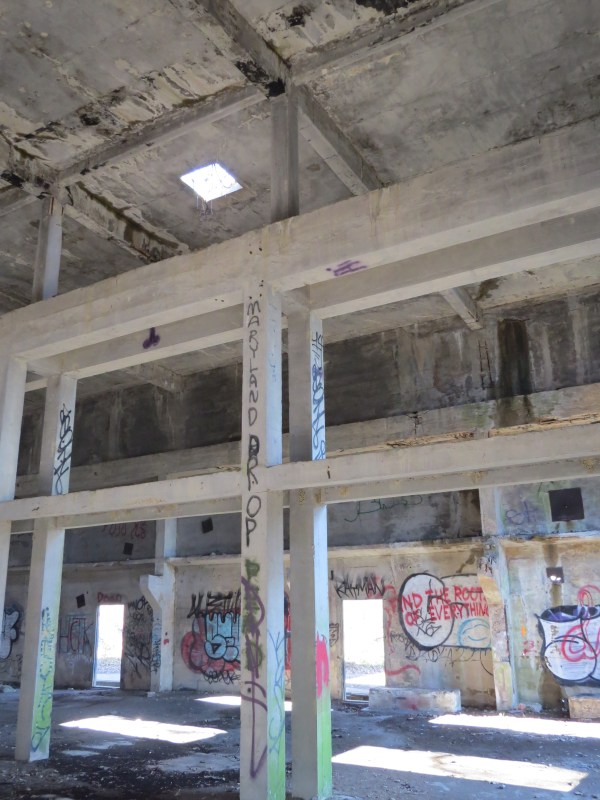
Inside the powerhouse at North Point State Park: ‘Find the roots of everything.’
After leaving the powerhouse I took a spur trail to gaze upon the Chesapeake Bay.

Chesapeake Bay from overlook at North Point State Park.
Friendly people had left sand art on the beach.

Friendly people were here…
After scanning the Bay for waterfowl and only finding a few bufflehead and a single double-crested cormorant, I left the park and drove farther down the peninsula to where it dead ends at Fort Howard, the former coastal artillery headquarters for Baltimore. Fort Howard has a rich military history, which I will not go into here but you can certainly read about it to your heart’s content elsewhere on the internet. The park is rather bedraggled and largely unused, likely due to its remote location. But there are some nice spots. Of course I only photographed the horrible ones because that’s just how I am.

The Brandon Shores Generating Station, viewed from Fort Howard. A 2011 NRDC report based on EPA data described it as releasing the second highest amount of toxic air pollutants annually in the U.S.
Despite the glaring lack of visitors, there are more picnic tables and trash cans at Fort Howard than I’ve seen at any other park. I was curious about the trailer in the photo below but simultaneously afraid so I chose not to get any closer. I thought if I called the number someone might be willing to divulge the contents but then this person would have my phone number. So I didn’t call. I find that life is an ongoing process of weighing the pros and cons of situations like this.
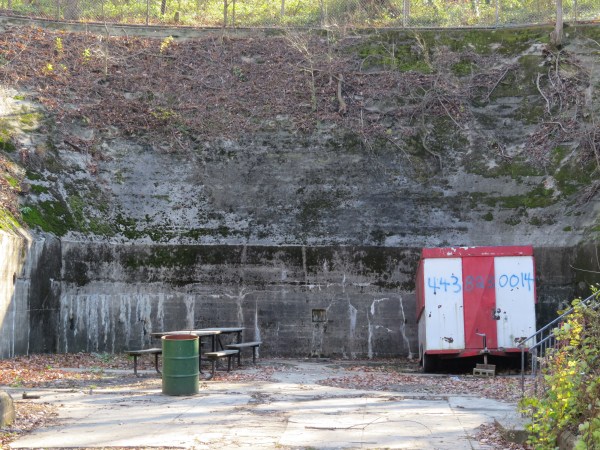
Scenic picnic area where I chose not to consume my lunch. (Note: if you call the number please leave a comment below.)
After passing the scenic picnic area I came upon this:
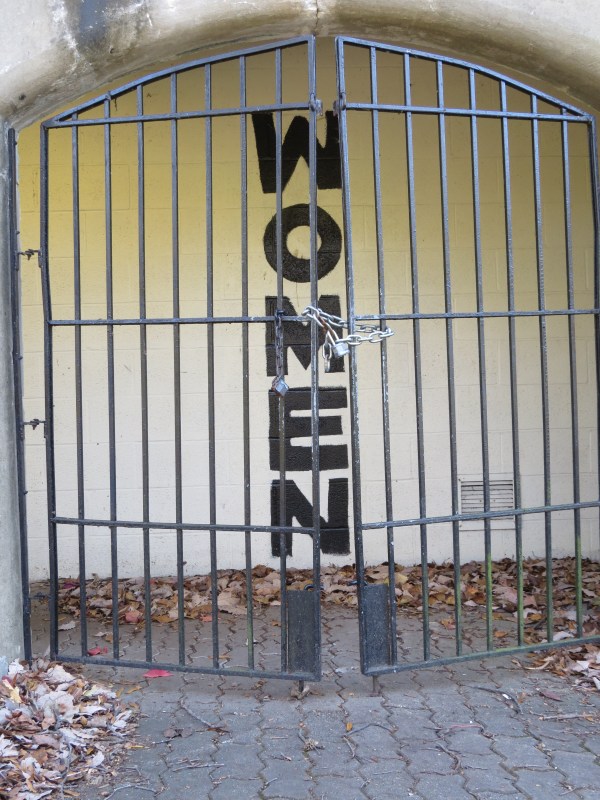
Menacing…
Again, I wasn’t sure what to do here. Were they keeping women locked inside or barring them from entry. I couldn’t tell, but I didn’t hear any cries for help and without bolt cutters there was not much I could have done. So I left. No doubt this decision will haunt me for quite some time…
Posted by sean on December 5, 2015
https://sd-stewart.com/2015/12/05/field-report-woodpecker-redux/
RIP Christopher Middleton, early translator of Robert Walser
Poet and translator Christopher Middleton died last week at the age of 89. Middleton was the first translator to bring Swiss Modernist writer Robert Walser to an English-language reading audience. He translated many other writers, including Georg Trakl, Christa Wolf, and Friedrich Nietzsche. But for me, his translation of Walser’s Jakob von Gunten remains the most important, as it was the first Walser book I read, which lead to a reading love affair of epic proportions. Middleton also translated many of the works in Selected Stories of Robert Walser, a fine collection of Walser’s short fiction. I’ve included two favorite excerpts from that volume below. To read a remembrance of Christopher Middleton, check out this piece by his fellow Walser translator Susan Bernofsky. The Paris Review also posted a tribute with one of his poems.
The walk seemed to be becoming more beautiful, rich, and long. Here at the railway crossing seemed to be the peak, or something like the center, from which again the gentle declivity would begin. Something akin to sorrow’s golden bliss and melancholy’s magic breathed around me like a quiet, lofty god.
—from ‘The Walk’
Often I walked in the neighboring forest of fir and pine, whose beauties, wonderful winter solitudes, seemed to protect me from the onset of despair. Ineffably kind voices spoke down to me from the trees: ‘You must not come to the hard conclusion that everything in the world is hard, false, and wicked. But come often to us; the forest likes you. In its company you will find health and good spirits again, and entertain more lofty and beautiful thoughts.’
—from ‘Frau Wilke’
Posted by sean on December 2, 2015
https://sd-stewart.com/2015/12/02/rip-christopher-middleton-early-translator-of-robert-walser/
from ‘the air we breathe’ (gabriel josipovici)
Then she was quiet and they were walking together, crossing the Luxembourg Gardens the sun was disappearing behind a thin film of grey the air was cold she started to shiver but he didn’t seem to notice it was as if he had come out with the express purpose of finding her and now he was taking her back and perhaps it was like that he had always had that sort of taciturnity, as if speaking was painful and silence too she wanted to take his shoulders stop him turn him round look into his eyes and ask him what he was doing what they were doing where they were why he was so sure she would go with him that she had nothing else to do the day to give up to him no other friends to see or work to do that she too had just come out for the same express purpose of seeing him finding him returning with him she wanted to look into his eyes ask him to explain but what was there to explain that was always what happened always how it was there was the need to explain to understand and then nothing to explain nothing to understand but still the need persisted and it was as if this nothing was what had to be understood how it could be nothing and something both together and at the same time so that it was as if a hand had taken your heart and squeezed it and it slipped up and out of your hand like a fish you had to hold it you had to press it you caught it again and again it jumped you would never catch it and
–Gabriel Josipovici, The Air We Breathe
Posted by sean on August 6, 2015
https://sd-stewart.com/2015/08/06/from-the-air-we-breathe-gabriel-josipovici/
a man of riverbanks
I am a man of riverbanks—excavation and inflammation—since it isn’t always possible to be a man of torrents.
—René Char, Leaves of Hypnos
Posted by sean on July 28, 2015
https://sd-stewart.com/2015/07/28/a-man-of-riverbanks/
the wing of sleep by roger gilbert-lecomte*
The Wing of Sleep
He waded all the way back up life’s stream
And came out the other side
Lost where others wander not yet born
He dreamt he was dreaming
Changing planets
Sleeping only to awake over and over
To the block of blood ticking in his head
Plunging in an ever deeper sleep
Awaking in depths of light unmeasured
Yet closer to that blaze
Plunged in the mortal deep of shadow
His bed a sumptuous cradle whose plumed head
Rocked him
Then froze into the lintel
Of a tomb
His dead eyes the wing of the enchanter sleep
Brushed to glittering life
Then rubbed out
Into so total a revulsion
Their lids
Squinched up like spleen-envenomed lips
He felt himself expand becoming the sky
Making fair weather and foul while dispensing rainbows
As the mills of space crushed
And flattened him like a shadow…
(to be continued)
*tr. David Rattray
Posted by sean on June 17, 2015
https://sd-stewart.com/2015/06/17/the-wing-of-sleep-by-roger-gilbert-lecomte/
Get Posts by RSS

 s. d. stewart