in the pines

© 2012 S. D. Stewart, Oregon Ridge

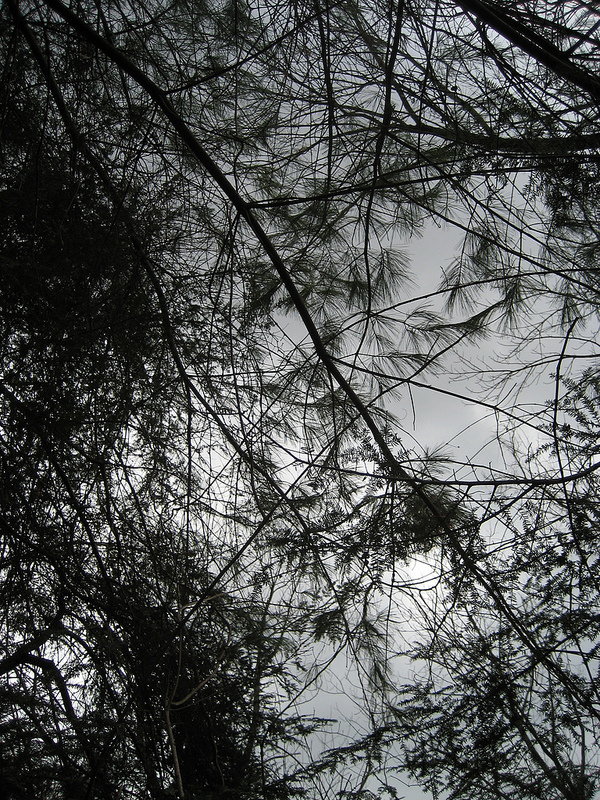
Monday afternoon, along the creek, I found a copse of pines and entered there. It was a day of reckoning, I reckoned, facing forward, rooted in time’s peat. I crushed the needles in my hands and breathed. A white-throated sparrow flitted at my feet. It was a moment, in the pines, and I lived it.

of scents and sounds: when kindling fails to ignite

In a recent post, a fellow blogger whose writing I enjoy surveyed the sometimes tenuous ability of words to capture thoughts and feelings, to provide us with the solace and understanding we as humans (and perhaps aliens) seek. As someone who has spent his entire life relying on the written word both to interact with and decode the world around me, I read the post with interest, and it set off a chain reaction of thought. Sometimes it feels like we introverts have limited tools at our disposal, but of these tools, for many of us written language is often the sharpest and most accurate. But what about when it dulls or falls short? Unable to write ourselves out of the cages we’re trapped in, what other implements exist to sever our bonds, assuage our pain, aid us in puzzling out our conception of the world and our place within it?

Humans arrive on planet earth armed with an arsenal of senses. From the point of our harsh entry into this world we explore our surroundings using our rapidly developing senses of taste, smell, touch, sight, and hearing. As adults, these senses, though apt to weaken over time, continue to serve as an interface between us and our environment. And so I’ve come to rely on them when words are not enough to dig me out of whatever rabbit hole I’ve fallen down. For brevity’s sake, in this post I will only focus on the two I’ve found to be most effective in mitigating mental or emotional collapse: scent and hearing.

The human sense of smell, while not as developed as in other species, is still a formidable system. We smell food cooking and find it makes us hungry. We know that certain scents can also stimulate memories, as Marcel Proust famously described. Scent (and its companion taste) can therefore help us revisit our past and perhaps plumb its depths for answers to our present questions.

As an example, I will deconstruct the roots of my strong nostalgic attachment to the scent of pine trees. About a decade ago, I moved to a strange and foreign land. It was like no place I’d ever lived before. I lacked the familiar and suffered as a result. One day I discovered a small grove of pine trees behind my workplace. When feeling low at my desk in the windowless bowels of the library, I’d creep out the back door and stroll down the sidewalk, breathing in the familiar pine scent. It inevitably flooded my “emotional brain,” the limbic system, with pleasurable sensations. When I probed at this reaction, I unearthed a store of early memories of summer vacations spent on the northeastern and southeastern coasts of the U.S., where the rich scent of pitch pines (northeast) and loblolly pines (southeast) hangs in the warm summer air. After this realization, I explored what it was about these times that seeded such a deep-rooted nostalgia in my brain. A number of possibilities came to me. For one, these vacations brought me close to nature, and a different kind of nature than what was available to me at home. At an early age, these trips helped form the foundation of my lifelong passion for the natural world. These vacations were idyllic, full of fun and leisure time, all experienced within a framework of the outdoors. Thus, important associations grew within me. I am also a Pisces, the water sign, and have always felt an affinity for water (though we’ve not been without our occasional disagreements over the years). Observing and listening to water soothes me. As a child I spent a lot of time near or in water. And so our family vacations at the ocean reinforced this. Now when I crush a few pine needles between my fingers, the scent rushes to my hypothalamus, triggering the resultant emotional reaction, i.e. all of the above. How does this help me? What I took from this was the knowledge of some actions I can take to improve my mood. I can travel to the beach (not always feasible, but good for longer term relief) or I can sniff some pine trees (easy enough to find and provides a quick fix). This is good information to know and I use it often.

Now let’s set scent aside and move to hearing. Hearing permits a range of constructive activities, but here I’d like to discuss it only in the context of music. In a 2001 Scientific American article, Kristin Leutwyler reports that no human culture on earth has lived without music, that music existed before agriculture, and possibly even language. Think about that for a moment. People may have been making music before they even began speaking and writing! This makes so much sense. Even though I don’t formally play music as much as I used to, I have always felt that it is the purest form of creative expression. As much as I love tinkering with words, sitting down and playing guitar or bass never fails to unspool rich threads of satisfaction inside me. While I have experienced similar transcendent moments while writing, I have to admit that they are rare and fleeting. Music feels like a more natural release; it comes from some deep unconscious stream, where it steeps in primal rhythmic tannins. There were many times in the past, playing in various bands or just casually with like-minded folks, that the music took over, and it was as if we were mere vessels, that the music was playing us, rather than us playing it. It was so much greater and larger than the sum of our collective instruments. The feelings such experiences provoked are difficult to describe. And perhaps this is because music is older than language.

Listening to music can be often nearly and sometimes equally as transcendent as playing it. I can recall certain shows, listening in the shadows as chills traveled through me, the hairs on my arms and neck standing up. Music has so much power, and it is so tied to emotion. In my head lies a map of my life with all the music I know plotted out upon it. Songs conjure people and places, melodies represent events, and in an instant I am transported somewhere else, to the epicenter of the song’s significance to me. Once there I can study its connections to my present life.

Leutwyler notes in her article that music, like scent, also travels to the limbic system, the part of our brain that is, evolutionarily speaking, one of the most ancient. It’s a part that we share with many other creatures, including whales and birds. Leutwyler cites Patricia Gray, head of the Biomusic program at the National Academy of the Sciences, who states in a paper written with colleagues, “When birds compose songs they often use the same rhythmic variations, pitch relationships, permutations and combinations of notes as human composers.” This is one likely reason why we find bird songs to be so appealing. It’s as if all of us creatures on earth, not just humans, are connected through music, making it truly more universal than words. As Dan Higgs sings in “Creation Story”:

but the music pervades
it was music that gave the shove
and resolved in music
we shall breathe

We can use music in many ways. On the simplest level it can elevate mood (or foster wallowing in it, depending on your inclination). My taste in music, like my taste in beer, changes with the seasons. In winter, it’s heavy and dark on both accounts. The transitional seasons, spring and fall, engender tunes and ales teetering on the cusp of light and dark, cool and warm. Take The Smiths, for example. While I consider them a band for all seasons, certain songs and even certain albums fit better on bleak winter days, while others suit the sweet breezes of an early June morning. And this is where it gets more technical. The mental map unfurls and soon I am poring over it, pinpointing exactly why that Ride song makes me think of my old college roommate. Or why that Pixies song wakens memories of a girl in church I burned for in that torturous way shy teenage boys have of burning.  If you want, you can plunge deeper, to the charred terrain on the map, and really begin to excavate. You may get lost, and feel real pain, but there is much to learn in that territory.

At any given moment in our lives, the health of our mental state depends so much on whether we are happy or not. Happiness can be elusive (as can its definition) and doesn’t often linger long, but discovering our individual keys to unlock this state of mind (whatever you want to call it) is crucial to our survival. We need to learn what is good for us and we need to remember it in times of crisis, be it minor or major. In my own experience, I’ve found that writing through trauma can hasten the healing process. But sometimes the words dry up, or their bandages only cover so much of the wound. At those times, I seek out the scents and sounds I know will bring relief. And if I’m really lucky, they will irrigate the mental fields enough for words to grow again.

corner seat upstairs

It was the way the trees spread out like outraged arms toward the sky. The grey in your eyes and everywhere else we looked. A dog barked and the mail slot clanged. Home again where visiting hours have begun. They never end and you never leave. Walking the streets late at night brings that yearning, the restless implants below your skin, bumping up at inconvenient times. The other ones make slow improvements when what you need is the now, your chest swelling with cold air, salty tears torn from your eyes, the pine needles to deliver something worth breathing in. No one asks for any of this. The cold flow of unattended life, the blank faces, the purchases and receipts.

It was the way rain fell across your face, eyes wide and shining. The cracked and swollen sidewalks, the screeching of your bicycle’s brakes. A leaking roof, a broken dryer, the things that need fixing when so much else is broken. We learn to survive through failure, leaving wreckage in our wake. We forge ahead out of desperation, armed with scraps of what we think worked before. Will the sky ever clear, or will the roof cave in on our heads. Does it even matter.

It can be the rubbing away of a greasy brand. The slipping off downstream. Evolution of the day-to-day, a smoothing out. The cracks, the breaks, the swells, the leaks, all of it stuffed in a burlap sack. Hurl it from the roof and watch it sink heavy in the rain. Watch it loosen the knot across your chest. This fraying will be our salvation, it will be our last rite.

spend it as you get it

The tissue holding these moments together, feather-thin as it is, expands and pulls taut as a hesitant breeze carries the fleetest scent of fall for us to breathe in. Moods collide, launch forth into open air, crash empty to the unforgiving ground. Days drip one into the next, weeks gel together, and still we stand here bare and afraid. What is it going to take for us to be satisfied? When we will we stop our restless twitching? This is life, by god, and it is only here to be lived. There is nothing to figure out; all the mysteries we concoct are simply ghosts dancing on the head of a pin, taunting us even as they fade away.  The windows we keep in our minds looking out onto future lives are glazed with thick smears of colorless idealism; the pictures of us that we see projected there are shiny distortions, marionettes we yank into desperate action after so many failed attempts to live wholly here and now. We convince ourselves that our daily lives constitute a dead existence, held fast by debt and fear of impoverished old age. But in truth we squander our time here, fretting and wishing instead of living.  And it seems like such a simple thing, to merely live, to stay in a moment for its duration, filling ourselves with its wonder. Yet so many of us fail in this one endeavor we all can claim as our purpose. We only have a finite amount of these moments and each passing day drains thousands more of them into the black hole of mortality. The least we can do is spend our allowance before it disappears.

time…again

My coworker cracks me up because she is so strictly punctual. I always knew it but now that she’s moved into the office next door, I am reminded of it constantly. I know she comes in at the same time every morning (even though it’s well before I arrive…I just know it).  I see her leave at 4:30 on the dot every evening. And if she doesn’t get to start her lunch right at noon, look out! We used to have a meeting on Tuesday from 11-12. One day when the meeting was running over, she got caught by a previous crazy manager for looking at the clock. While she was certainly embarrassed, she was no less indignant afterward that her lunchtime had been postponed.

I bring this up because I have been thinking about time again. Long-time readers of this blog in its many incarnations (all one, possibly two, of you) will perhaps recall that I have railed against time often in the past. It bothers me what human society has done with time: assigning monetary value to it, breaking it down into chargeable chunks, using it to create arbitrary deadlines and artificial windows of opportunity.

Anyone who has paid a bit of attention to time knows that it has a curious elastic quality to it. How fast it seems to go by depends heavily on what you are doing within it. Sometimes it depends on what substances you have consumed. The part of the day can affect this elasticity, too; a morning will seem endless, an evening brief. Often this has to do with the amount of available light. And certainly age also plays a factor. As we get older, years seem to slither by at an alarming rate.

So, what to do about time. I know I am most content when unencumbered by my awareness of time’s passing. Smash the alarm clocks! Abolish workday schedules! Don’t think about how much time something takes and judge it based on that alone. Shortcuts spring from a flawed thinking. There is no way to “save time.” It’s a delusion. Why are we trying to do things faster, anyway? It implies that what is happening right now is somehow not good enough, not “worth our time” and so we must get past it faster, faster, on to the “better” things that are more worth our time. But in the end, we just shortchange ourselves, because we have arbitrarily assigned “worth” when in fact every moment of life is valuable and should not be rushed through.

We are living in a frightening period of history. An entire generation is growing up with the expectation that instant gratification is the norm. People’s thresholds for waiting have diminished to a granular level. Impatience is ingrained within us. We are in a rush to get everywhere in our stupid cars. We get food in less than a minute, from a microwave or from a drive-thru window. Information is available 24 hours a day from the internet, from palm-sized devices we carry around with us everywhere, even into the bathroom. News travels faster than ever before. When we have to wait, we get indignant. Why should we have to wait? It’s not fair.

The whole situation has gotten so bad that there is now an entire slow movement. I don’t know much about it, but I think it started with Slow Food and snowballed from there. Clearly others are concerned about the speed at which society travels these days. I suppose making a conscious decision to try to slow down is a good thing. But I am more interested in how we got to where we are and why. Are we really more impatient today than we used to be? Is it technology’s fault? What is driving this desire and expectation for everything to be instantly available? Why do people drive so fast? What the hell is wrong with us?

Of course I don’t have answers for these questions. But I think about them constantly. I wonder why I feel so alienated. I know others do, as well. It makes me wonder if anyone would have an answer to the question of why they are in such a rush. Maybe they’ve just stopped thinking, and if they started again they would realize the absurdity of their actions. Perhaps we have all just become dulled to the point that we don’t know what we’re doing or why anymore. Maybe we have just each become a mere collection of tics: foot on the gas, fingers on the keypads, logging in and clicking around, spitting out to each other the words we’ve just heard and read and watched…never stopping to think for ourselves.

lightness

Beneath the crust lies a kernel. A kernel formed of decisions made and those deferred. Crack it open and free the seed inside to float away. Follow it. Down a deer trail. Under a rock. Into the reeds. Up in the air, over the ridge. Pay attention. Ignore the ghostly hands pulling at your collar, suggestive in manner, dragging you, enticing you toward a warm spot to curl up and stop. It’s always the decisions. Counseling for or against. Talking, hashing it out, pacing in deranged circles. Stop the pacing. Wrangle your thoughts and subdue them. Step back. Breathe. There is a lightness in us that we can reach. Tap it like a sugar maple and let it flow, sweet and pure. Drink it in and never stop. What will matter in the end is how we spent our days; these moments won’t return.

lost gander

Last night. Goose travels through changing seasons, from falling leaves to falling snow. What does he seek? Brethren pass in and out of our lives. We still move on. Time passes; the seasons mark. Our days the only constant. The banjo plays high and lonesome and the spirit leaves the body. Tune out tipsy voices, the hush of rustling coats. The notes crawl inside you and sound out in the cavern of your heart, the echoes so loud you hear nothing else. You hear nothing else, only what the goose knows, without even knowing it. Restless and lost, with only the seasons to remind us of the coming end, our silhouettes stark against a bone white moon.
(more…)

from a room with slanted ceilings

In another place, for once.  These walls blue instead of yellow, yet the likeness remains.  A window from which to gaze, at treetops, at sky and clouds.  What we endure like some concrete mix plastered to our outsides, layering on another wall between what we feel and what we show to the others.  The talking we do, so careful, so orchestrated, a hackneyed script whittled down to nothing.  But today is not a mere trailing on of yesterday.  No, today is a rope tossed back to us, its intricate knotted fibers there for fingers to grasp and pull us forward to lighter times, when we are who we are and we do what we are here to do.

this just in: subtle schedule shift forces new cracks in worn shellac

The pendulum swings upward again. Remember a sky of polished stone. The tree of many birds. Cracked sidewalks underfoot while perched alone at the end of the earth. How hard it is clawing our way up to have a look around. How sweet the first taste of syrupy mania when we finally do. Tap your foot to the mighty dirge. Scream ’til you’re hoarse inside. Run until your soul leaves your body and then keep on running until it returns. Record your dreams and re-read them until you understand. Untether yourself from what you think matters and wait for a sign. Pay attention to the crows circling above at dusk. Their presence is no coincidence. And neither is yours.

indivisible

“We are living in the dark ages”–NMN

The crows are gathering…

Life is in the interstices.

In the moments after what happens is where we find ourselves.

It’s all we’ve got left.  It’s all we ever really had to work with.

Not answers to find, per se, but maybe a subtle understanding.

Maybe some rocky, unsettled…peace.

  • Recent Posts

  • Navigation Station

    The links along the top of the page are rudimentary attempts at trail markers. Otherwise, see below for more search and browse options.

  • In Search of Lost Time

  • Personal Taxonomy

  • Common Ground

  • Resources

  • BOOKS BOOKS BOOKS